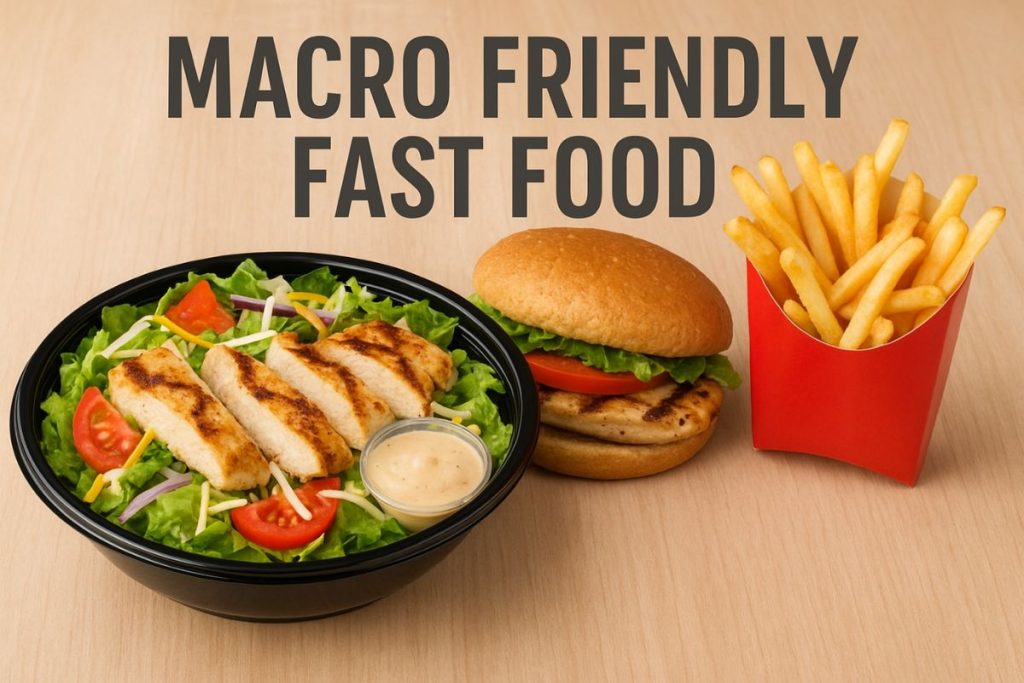
In today’s busy world, grabbing a quick meal is tempting for fitness enthusiasts on the go. But traditional fast food often fails to meet our nutritional needs. Macro Friendly Fast Food means choosing fast-food options that still fit your diet’s macronutrient goals (balanced protein, carbs, and fat). With smart swaps, you can build satisfying meals without skimping on nutrition. For example, research shows high-protein meals boost fullness and help preserve muscle during weight loss. By focusing on protein and fiber, you’ll stay energized and support muscle recovery even when eating out. Studies note that high fast-food intake correlates with higher obesity risk, so making each fast-food meal as healthy as possible is worthwhile.
Tracking macros can empower you to enjoy flexibility: in an “If It Fits Your Macros” (IIFYM) approach, any food is allowed if it fits your daily targets. In practice, IIFYM diets often end up higher in protein and healthy fats, with moderate carbs. This means you can still enjoy a burger or tacos, provided you plan portions. Many fast food chains now offer salads, bowls, and grilled options so you can hit your macros. The rest of this guide will cover macro basics, practical tips, and restaurant picks. By the end, you’ll know how Macro Friendly Fast Food can transform your diet from breakfast to dinner without feeling restrictive.
Understanding Macro Friendly Fast Food
Macronutrients (macros) are the major nutrients that provide energy: protein, carbohydrates, and fat. General dietary guidelines suggest 45-65% of calories from carbs, 20-35% from fat, and 10-35% from protein. Protein is critical for building and repairing muscle and supporting hormones, carbohydrates provide fuel, and healthy fats support cell function. A macro-friendly meal hits these targets with wholesome foods: for example, lean chicken for protein, veggies and beans for carbs, and a bit of healthy fat like avocado. In contrast, many fast-food combos are heavy on refined carbs and fats. By planning, you can swap items (grilled not fried, extra vegetables, smaller portions) to create a balanced meal.
Meeting macros is easier when eating nutrient-rich foods. An IIFYM guide even notes it’s best to focus on fruits, vegetables, high-quality proteins, nuts, seeds and whole grains. For example, loading up a burrito bowl with beans, veggies, and chicken provides protein, fiber, and vitamins that a typical burger and fries lack. Learning about macros can be eye-opening one analysis showed a candy bar and a salmon fillet have similar calories, but the candy is carb-heavy while the salmon is protein-rich. Seeing these differences helps you make smarter fast-food choices. With macro-friendly fast food in mind, every meal becomes a chance to hit your goals.
Why Macros Matter for Fitness
For fitness goals, protein and fiber are key. High-protein meals increase satiety and boost metabolism helping you lose fat while retaining muscle. In other words, a protein-rich fast-food option will keep you feeling fuller than a carb-heavy one of the same calories. Balanced macros also stabilize blood sugar and provide steady energy. Eating too many refined carbs and fats (common in many fast-food combos) tends to spike and crash blood sugar. By contrast, pairing protein with fibrous veggies and moderate carbs leads to even energy. Protein in particular provides the greatest satiety boost compared to fats or carbs, helping control hunger.
Adequate protein at each meal supports muscle repair and growth, which is crucial when you’re active. Nutrition studies find that protein can preserve lean muscle mass even in a calorie deficit. This means that if your fast-food meal packs 25-30g protein, you’ll aid recovery after workouts. Carbs from vegetables or whole grains refuel energy without causing huge insulin spikes, while healthy fats (e.g. a slice of avocado or nuts) support hormones and nutrient absorption. Remember, the Macro Friendly Fast Food approach is all about balance: get a big portion of protein, at least half a plate of veggies or fiber sources, and then a modest portion of carbs. This keeps you nourished and supports training.
Flexible Dieting (IIFYM) and Fast Food
“IIFYM” (If It Fits Your Macros) is a diet strategy built on flexibility. The idea is simple: calculate your macro targets, then eat any foods that fit those numbers. Health experts note that this can be more sustainable than strict diets. For many people, an IIFYM plan ends up higher in protein and fat, with carbs filling out the remaining calories. This approach can include fast food as long as you plan portions. For example, you might budget a meal with 700 calories (like a grilled chicken salad and dressing) and then use the rest of the day’s food for other needs.
Flexible dieting also teaches you about portion sizes. Once you know your macros, tracking a meal helps you learn which foods are leaner. For instance, a grilled chicken sandwich (even from a drive-thru) might fit your protein goal with less fat than a fried burger of the same calories. Apps like MyFitnessPal or Lose It! make this easier by listing menu macros. In short, Macro Friendly Fast Food is completely compatible with IIFYM: you simply swap menu items to hit your daily targets.
Tips for Choosing Macro Friendly Fast Food
- Macro-Friendly Fast Food Tip – Pick Lean Proteins: Always choose grilled or broiled meats over fried. At Chick-fil-A or KFC, go for grilled chicken instead of nuggets or fried strips. For example, Chick-fil-A’s 12-count Grilled Nuggets provides 38g protein for just 200 calories, making it extremely macro-friendly. In general, chicken breast, turkey, lean beef or fish are your best bets. If breakfast is available, egg-white sandwiches or turkey sausage are protein-rich options. Skipping the bread (eat burgers as lettuce wraps) can also cut carbs if needed.
- Macro-Friendly Fast Food Tip – Add Fiber-Rich Sides: Fiber balances out your macros and keeps you full. Swap fries for vegetables or legumes. Many Mexican or Mediterranean spots let you choose beans, rice, or salads. For example, load extra black beans or lentils at Chipotle for fiber and protein. Some chains have side salads, fruit cups, or chili these add veggies and fiber. Fiber slows digestion and blunts blood sugar spikes. Even adding a side salad to a fast burger tray adds volume and nutrients.
- Macro-Friendly Fast Food Tip – Skip Sugary Extras: Watch out for soda, milkshakes, and sweet sauces. These add lots of carbs without nutrition. Stick with water, unsweetened tea or coffee. On the food side, choose simple dressings and condiments. For sauces, mustard, hot sauce, salsa or vinegar-based dressings are usually lower in sugar than ketchup, BBQ or creamy sauces. For example, many Chick-fil-A sauces have 45 calories per tbsp except their Sweet & Spicy which is a better low-sugar choice. Sugary drinks can add 30+ grams of carbs in one serving avoid them.
- Macro-Friendly Fast Food Tip – Control Portions: Fast-food servings can be large. Order smaller sizes or share combo meals. If an order comes with fries, consider skipping or taking half. Use nutrition info to check calories. For example, a regular burrito can be 700+ calories swapping to a burrito bowl (no tortilla) cuts carbs and calories. You can also split a burger with a friend, or pack half to eat later. Staying within your macro targets is easier if you limit portions. Sometimes asking for a “child size” or “light” version can give you just the right amount.
- Macro-Friendly Fast Food Tip – Emphasize Protein: Aim for at least 25-30g of protein per meal. Many chains offer “Protein Bowls” or “Protein Style” options. If nothing else, double up on the meat. At sandwich shops, ask for extra meat (e.g. double turkey). For salads or bowls, choose the grilled protein versions. High-protein meals keep you fuller. For example, even a plain grilled chicken salad (without dressing) can hit 30g protein. If you’re very active, you might go up to 40g to help muscle repair.
- High Protein = Best Macros: Look for meals with at least 20g protein. Grilled chicken salads and burrito bowls often top lists of best fast food macros because they are filling and muscle-friendly. These high-protein choices ensure you’re getting good nutrition instead of empty carbs.
- Balance Your Plate: Visualize your plate: fill half with vegetables or salad, a quarter with protein, and a quarter with whole grains or starchy sides. At a burger place, add extra lettuce and tomato. At a burrito bar, ask for double veggies and 50/50 rice-bean mix. Even a pizza place can work if you make a salad or veggie side. Think of healthy fats too: a slice of avocado or a packet of nuts can add nutrients, but watch the amount. Being mindful of every component helps turn any fast-food meal into a balanced macro-friendly plate.
With these tips, you can make almost any meal into Macro Friendly Fast Food simply by planning ahead.
Best Macro Friendly Fast Food Restaurants and Meals
These “best picks” are popular with macro-tracking diners:
Chipotle: Custom Protein Bowls
Chipotle is consistently cited as macro-friendly because of its build-your-own style. How to order: Start with a base of greens or a half-and-half mix of brown rice and black beans (for fiber and carbs). Then add a lean protein like grilled chicken or steak. Top with fajita veggies (peppers, onions), salsa, lettuce, and a modest sprinkle of cheese or guacamole. Why it’s macro-friendly: You get a high-protein bowl (30-40g protein from 4-5 oz meat) plus beans and veggies for fiber, all without excess fat. If you follow the above, the bowl hits roughly 10-15g fat, depending on extras.
High-Protein Steak & Bean Bowl
Build this bowl with mixed greens or ½ cup brown rice as the base. Add 4-6 oz grilled steak, ½ cup black beans, and fajita vegetables. Top with salsa and lettuce. This hearty bowl provides around 35g protein and plenty of fiber, with moderate carbs from the rice.
Chicken & Veggie Burrito Bowl
For a leaner option, use grilled chicken breast and load up on vegetables. Start with lettuce or a 50/50 rice-and-bean mix, add 4-5 oz chicken, extra fajita peppers and onions, plus pico de gallo. Skip cheese to save fat. This combo yields 30g protein and numerous nutrients.
Chick-fil-A: Grilled Chicken and Salads
Chick-fil-A stands out for its lean chicken options. Instead of the fried sandwiches, choose the Grilled Chicken Sandwich (multigrain bun, lettuce, tomato) with 29g protein and only 320 calories when you skip extra cheese/mayo. Their Grilled Nuggets are extremely lean: a 12-count has 38g protein for just 200 calories. Pair grilled items with a side salad or fruit cup instead of fries. The salads (Spicy Southwest, Cobb, etc.) become macro wins when topped with grilled chicken.
Grilled Chicken Nuggets & Sandwich
Chick-fil-A’s grilled chicken options are top-tier for macros. A 12-piece order of grilled nuggets provides 38g protein for just 200 calories. Their Grilled Chicken Sandwich (on multigrain bun) adds another 29g protein. Pair either with a side salad or Greek Yogurt Parfait instead of fries to keep carbs and fats low.
Protein-Packed Salads
Chick-fil-A’s salads become macro winners with grilled chicken. For example, the Spicy Southwest Salad with grilled chicken contains 28g protein and loads of veggies. Choose light dressing or use vinegar to avoid extra fat. These meals are satiating and nutrient-dense a Macro Friendly Fast Food pick among chicken chains.
Sandwich Shops (Subway, Panera)
Sandwich and salad chains give you more control to build macro-balanced meals.
Double-Turkey Sub (Subway)
At Subway, order a 6-inch sub with double turkey (or chicken) and plenty of veggies on 9-grain wheat bread. A double-turkey sandwich can exceed 30g of protein and about 40g carbs. Use mustard or vinegar instead of mayo to keep added fats low. This custom sub becomes a convenient Macro Friendly Fast Food meal.
“You Pick Two” Combo (Panera)
Panera’s half-sandwich + half-soup (or salad) option is ideal. For example, half a Turkey sandwich on whole grain (20g protein) plus a cup of Chicken Noodle or Lentil soup (13-17g protein) yields a filling combo. This provides 35g protein, vegetables, and fiber. Opt for whole-grain bread, and get dressings on the side. Smoothies with veggies can also boost nutrients, but treat them as carbs. Panera’s built-in nutrition info makes it easy to stay on track.
McDonald’s, Wendy’s, Taco Bell and Other QSRs
Even classic burger joints have smart macro options:
McDonald’s Lean Choices
At McDonald’s, try the Artisan Grilled Chicken Sandwich or an Egg White McMuffin (no cheese). These provide 18-25g protein for about 300 calories. Pair them with apple slices or a side salad instead of fries. Avoid super-sized items and sugary drinks; stick to diet soda, water, or coffee.
Taco Bell Power Menu
Taco Bell’s Power Menu items are surprisingly balanced. For instance, the Chicken Power Menu Bowl (chicken, black beans, lettuce, pico, guac, no rice) provides 25g protein. Two Fresco Chicken Soft Tacos (chicken, lettuce, tomato in a soft tortilla) give 24g protein with minimal fat. Skipping cheese or sour cream (Fresco style) cuts extra fat. These options satisfy fast-food cravings while fitting macros.
Wendy’s & More
Wendy’s has good choices too: a Grilled Chicken Wrap (27g protein) or a Jr. Bacon Cheeseburger (no cheese) around 18g protein. Their Small Chili is 290 calories with 17g protein and 12g fiber, making it a healthy side. Many chain cafes (Starbucks, Dunkin’, etc.) now offer protein boxes or egg-white sandwiches for breakfast (15-20g protein). Basically, look for anything with lean meat or eggs and veggies.
These picks highlight how to choose the best macro friendly fast food items at popular restaurants.
Sample Meal Ideas and Recipes
Try these quick ideas either at home or adapted from menus:
- Grilled Chicken Burrito Bowl: In a microwavable bowl or at a chipotle-style bar, combine 4 oz grilled chicken, ½ cup brown rice, ½ cup black beans, ½ cup sautéed peppers/onions, and salsa. Add lettuce and a squeeze of lime. (Approx. 35g protein, 40-45g carbs, 8-10g fat.) This is a classic Macro Friendly Fast Food-inspired meal.
- Turkey & Avocado Wrap: Take 3 oz sliced turkey (deli or from a sub shop) on a whole-wheat tortilla. Add ¼ avocado, spinach, tomato, and mustard. Roll up tightly. Serve with carrot sticks or a side salad. (Approx. 25g protein, 30-35g carbs, 12-15g fat.) This combines protein and healthy fat.
- Power Salad: In a bowl, combine 4 oz grilled chicken or shrimp, mixed greens, ½ cup chopped veggies (cucumber, bell pepper, tomato), and ¼ cup beans or lentils. Top with 2 tbsp feta or nuts and a drizzle of olive oil & vinegar. Add a small whole-grain roll if you need extra carbs. (Approx. 30g protein, 15g carbs, 15-18g fat.) Restaurants like Chick-fil-A or Panera let you create similar salads easily.
- Protein Breakfast On-the-Go: Order an Egg White Sandwich (like Chick-fil-A’s or McDonald’s) and an apple. The sandwich (300 cal) provides 17-20g protein, and the fruit adds fiber. Alternatively, grab a Starbucks Protein Box (egg, cheese, fruit, nuts) for 20g protein. These morning options fuel your day.
- Subway-Style Double Sandwich: Split or save half of a 6-inch double-meat sub. For example, eat half a double-turkey sub at lunch and save the other half for later. It ends up being 20g protein and 30g carbs per half, making it like two smaller meals. Pair one half with a salad to balance macros.
- DIY Veggie Power Bowl: Use leftovers: brown rice + black beans + any grilled meat + salsa + veggies. Add a bit of Greek yogurt or avocado. This is exactly what you’d get at a fast-casual chain. By portioning the ingredients (4 oz protein, ½ cup carbs, lots of veggies) you hit your macros nearly effortlessly.
These meal templates show that Macro Friendly Fast Food is simply about balance. Swap proteins (chicken, turkey, fish) and veggies as you like, and use the restaurant’s nutrition info to adjust portions if needed.
Conclusion
Macro Friendly Fast Food proves that convenience and fitness goals can go hand-in-hand. By prioritizing lean proteins and fiber, controlling portions, and using nutrition info, you can transform a restaurant meal into one that supports your workouts. Rather than viewing fast food as off-limits, treat it as an opportunity to practice macro management. With the tips above and creativity (for instance, ordering a salad bowl at Chipotle, the Egg White Grill at breakfast, or a grilled sandwich with extra veggies), you can eat out without guilt. Over time, these simple swaps will improve your diet quality and energy. Start with one change today see how it feels to fuel your body correctly. Macro friendly fast food can be part of a healthy lifestyle when chosen wisely.
What’s your favorite macro-friendly fast food hack? Share this guide with friends and comment below with your go-to orders!
FAQs About Macro Friendly Fast Food
Q: What is macro friendly fast food?
A: Macro friendly fast food refers to meals at fast-food restaurants that balance the main nutrients especially high in protein and moderate in carbs/fats to fit within your diet goals. These meals typically include lean proteins (grilled chicken, fish, etc.), vegetables, and controlled portions of grains. For example, a grilled chicken salad or a burrito bowl (minus heavy extras) are macro friendly. The key is that they “fit your macros” for protein, carbs, and fats.
Q: How do I track macros at a fast-food restaurant?
A: Most chains post nutrition information online or in-store. Use apps like MyFitnessPal or Lose It! to log the items. Weigh or estimate portions if needed. Stick within about 5-10 grams of each macro goal for best results. A good approach is to decide your daily targets first (say, 150P/200C/60F grams) and then choose a meal that fits. For instance, if you need 30g protein, look at grilled items or salads with chicken. If you’re unsure, ask for a tray of items (bun, meat, lettuce) and eyeball the parts. The apps also have fast-food menus built in.
Q: Can I lose weight while eating fast food if I count macros?
A: Yes. Weight loss is about calories and macro balance, not just food source. By choosing macro-friendly meals (lean protein, veggies, whole grains) and keeping calories in check, you can lose fat even when eating out. Research consistently shows that reducing calories leads to weight loss, and meals high in protein help retain muscle. Many flexible dieting practitioners have successfully lost weight while including fast food in their plans. Just be mindful to create a calorie deficit overall.
Q: Which fast food chains have the best macro-friendly options?
A: Chains like Chipotle, Chick-fil-A, Subway, and many sandwich or salad shops are great places to start. Chipotle bowls (chicken, beans, veggies) and Chick-fil-A grilled items top the list, because they’re easy to customize and high in protein. Subway lets you double your meat and load up veggies, and Panera’s soups and half-sandwich combos are balanced. But almost any restaurant can be made macro-friendly: at burger joints, go grilled chicken; at Mexican places, choose black beans and chicken; at coffee shops, grab egg-white sandwiches or protein boxes. The idea is to focus on protein and fiber anywhere you go.
Q: Are there any downsides to eating fast food on a macro diet?
A: Fast food can be high in sodium and low in certain micronutrients (like vitamins, fiber if you skip veggies). Relying on it too much means you might miss nutrients from whole foods. It’s best used as part of a varied diet. Even when choosing the healthiest menu items, supplement fast-food meals with fruits, veggies, and whole grains at other meals. Also, some “healthy” fast-food items can still be calorie-rich (watch salad dressings and add-ons). Use fast food strategically as a convenient protein source or treat rather than the bulk of your diet.
Q: What constitutes the best macros fast food meal?
A: The “best macros” fast food meal is one that hits high protein with moderate carbs and healthy fats. For example, a grilled chicken breast with a side of steamed vegetables and brown rice would be ideal (lots of protein, fiber, and complex carbs). Among real menu items: a grilled chicken salad with light dressing, a protein power bowl (meat + beans + veggies), or a turkey sub on whole wheat (double meat, no cheese) are all excellent. Focus on meals that give you 25-40g protein and include vegetables or whole grains those are consistently the top macro-friendly picks.