
Many people with conventional lower dentures struggle with stability and comfort. Unlike upper dentures, which use suction against the palate, removable lower dentures only rest on the gum ridge and tend to slip under tongue and cheek movements. Over time, the jawbone under a lower denture continues to shrink, worsening the fit and requiring frequent relines or adhesives. This is why lower denture implants have become an increasingly popular solution: implant-supported overdentures that stay put.
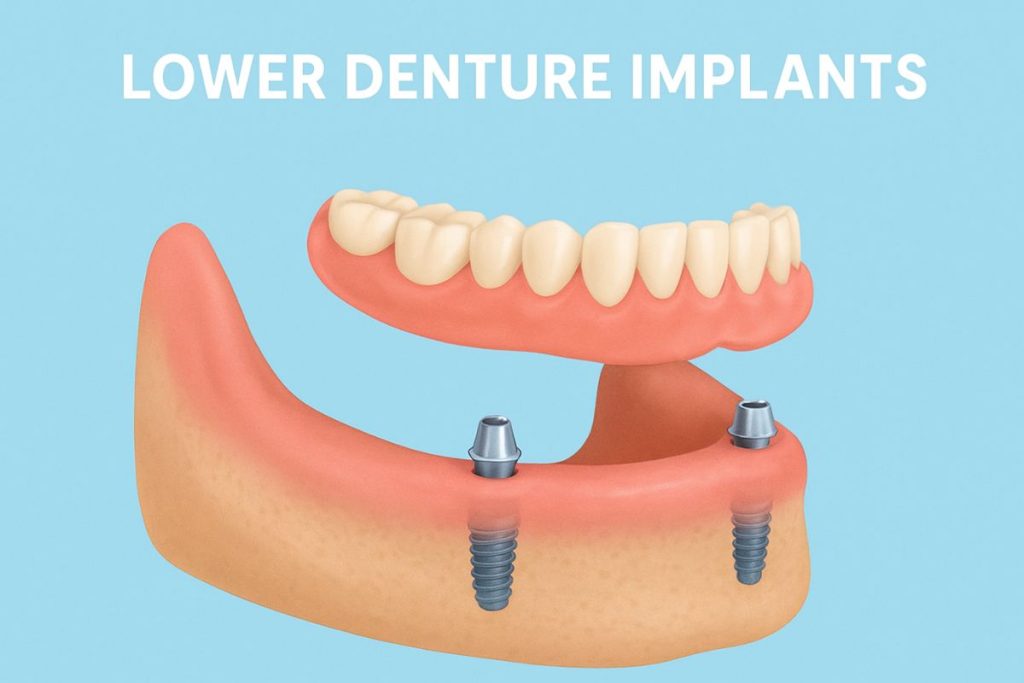
Lower denture implants secure the overdenture onto titanium posts embedded in the jaw. As the illustration shows, the denture snaps onto fixed implant abutments instead of resting loosely on the gums. These implants then fuse with the jawbone to act like artificial tooth roots, maintaining bone volume. With implants in place, the overdenture remains stable during chewing and speaking, providing much better function and comfort. In short, the lower denture is no longer a loose appliance but a solid arch anchored to your bone.
What Are Lower Denture Implants?
Lower denture implants refer to a removable denture (overdenture) that is supported by dental implants in the lower jaw. Two or more titanium implants are surgically placed into the mandible (lower jawbone). After healing, the custom overdenture is fabricated to attach onto these implants, providing secure support. The denture still replaces all the lower teeth, but it “snaps” onto the implants instead of floating on the gums.
There are two main approaches:
- Removable Implant Overdenture: The denture clips onto 2–4 implants, typically using locator or ball attachments. The patient can remove this denture nightly for cleaning.
- Fixed Implant Bridge (All-on-4): A permanent lower denture is screwed onto four or more implants. It stays in the mouth continuously and can only be removed by the dentist.
In everyday language, “lower denture implants” usually means the removable overdenture option, which is more common. Some specialists call this a “mandibular implant overdenture” or “implant-retained denture.”
An implant-supported lower overdenture typically uses two implants in the front jaw, as shown above. The patient removes the denture for cleaning, but when in place it is anchored firmly. This method preserves jawbone and facial structure much better than a conventional denture. Patients no longer experience the severe slipping or sunken appearance that can come with bone loss.
Common Attachment Types
There are a few common ways the overdenture attaches to the implants:
- Ball Attachments: Each implant has a small ball-shaped abutment, and the denture contains rubber O-rings that snap onto these balls. This setup allows some flexibility if the implants aren’t perfectly aligned.
- Locator Attachments: Locator systems use a low-profile male housing on the implant and replaceable nylon inserts in the denture. They accommodate slight angle differences and provide secure retention.
- Bar Attachments: A custom metal bar is made to connect two or more implants. The overdenture then clips onto this bar with internal clips. This option provides excellent stability and evenly distributes biting forces.
- Magnetic Attachments: Some systems use magnetic clips where each implant has a small magnet and the denture has corresponding magnets. Magnetic attachments allow easy seating but usually offer less retention than mechanical clips.
Your dentist will recommend the attachment method that best suits your situation. Each type has its own advantages in terms of cost, ease of cleaning, and retention strength.
Mini vs Standard Implants
Standard implants are typically 3–4 mm in diameter. Mini implants (often 2–3 mm) can be used when jawbone is narrow. Mini implants require less surgery and can sometimes be placed immediately, but they have less bone contact. They may not withstand heavy chewing as well and can wear out sooner than full-size implants. If bone and budget allow, conventional implants are generally preferred for a durable lower overdenture.
Benefits of Lower Denture Implants
Lower denture implants offer significant improvements in daily life for denture wearers:
- Firm Stability: The denture is firmly anchored, eliminating most slipping and lifting. Implant overdentures dramatically reduce unwanted movement during eating or speaking. Even with a vigorous bite or a laugh, the denture stays in place, which gives patients much more confidence.
- Greater Chewing Power: Patients regain a much stronger bite. Conventional lower dentures often allow only about 10–20% of normal chewing force. With implants, people can bite into food more naturally and enjoy many foods that were previously off-limits. Clinical studies show that older patients with implant-supported overdentures have significantly fewer chewing problems and report a higher oral health-related quality of life. For example, one study found that older patients with implant overdentures had dramatically fewer chewing problems than before, meaning many could eat foods (like raw vegetables and meat) comfortably again.
- Bone Preservation: The implants act like real tooth roots, providing needed stimulus to the jaw. This prevents the rapid bone resorption that occurs under a normal denture. By preserving bone, the implants help maintain your original jaw height and facial profile. In the long run, this can save money: implant-retained dentures help avoid the need for frequent new dentures or costly bone graft surgeries later.
- Natural Comfort: Implant dentures fit snugly, so you won’t feel the constant rubbing and sore spots caused by a loose denture. Many patients find they no longer need messy adhesives once the implants secure the plate. Overall, speaking and eating feel much more natural very much like wearing permanent teeth.
- Enhanced Confidence: Without fear of a denture slipping out, many people feel more confident eating and socializing. Smiling and speaking is easier with implants. Practitioners note that patients often do not hesitate to laugh or talk loudly once their denture is stabilized.
- Longevity: With proper care, the implants themselves can last for decades (even a lifetime). The overdenture portion may need replacing after about 10–15 years of normal wear, but the support remains. Implant-supported dentures also typically require fewer adjustments and relines than conventional dentures, which saves you future appointments.
The Procedure for Lower Denture Implants
The process of getting lower denture implants generally involves several steps:
- Consultation & Planning: Your dentist or oral surgeon will review your medical history and dental condition. They will take detailed 3D scans or X-rays to map your jawbone and nerves. A surgical plan is devised, often using computer software, to determine the exact implant positions.
- Preparatory Work: If any lower teeth are left, they may be removed. If the jawbone is too thin or weak, a bone graft might be placed to strengthen it. Common grafting materials include donor bone or synthetic substitutes. The grafted area then needs several months to heal.
- Implant Placement: In a minor surgery (under local anesthesia), small holes are drilled in the jawbone, and titanium implants are inserted. For a typical lower overdenture, the surgeon will place two implants in the front part of the mandible. The gums are then sutured over or around the implants to heal.
- Healing (Osseointegration): Over the next 3–6 months, the bone grows around the implants, a process called osseointegration. During this period, you can wear a temporary denture with relief spaces so it doesn’t press on the implants. Good nutrition and avoiding smoking will support healing.
- Abutment Attachment: Once healed, the implants are uncovered and healing abutments or connectors are attached. These abutments protrude through the gums and will anchor the overdenture.
- Overdenture Fitting: A final lower denture is made (often while you heal) and then fitted. It contains the attachment housings that match the implant abutments. At your fitting appointment, your dentist secures the denture onto the implants and makes adjustments until the fit and bite are ideal.
- Follow-Up: You’ll return for follow-ups to check implant stability, gum health, and the denture’s fit. The dentist may tighten any screws and ensure you can insert/remove the overdenture properly.
Sedation and Comfort
If dental anxiety is a concern, many offices offer sedation for the implant procedure. Options include:
- Oral Sedation: A pill you take before surgery, making you drowsy and relaxed.
- Nitrous Oxide: Inhaled “laughing gas” that eases anxiety during the procedure.
- IV Sedation: You enter a light sleep state (twilight sedation) but remain conscious.
Local anesthesia is always used during surgery to numb the area. With sedation, most patients are awake but deeply relaxed. For example, after IV sedation you should arrange to have someone drive you home, and plan to rest for the rest of the day. Talk to your dentist about your comfort preferences; sedation makes the experience painless and stress-free.
Immediate vs. Delayed Loading
In certain cases, implants can be immediately loaded (a temporary denture is attached the same day). Immediate loading requires very stable bone and precise placement. It allows you to have teeth right away but isn’t suitable for everyone. The more common approach is delayed loading, where you wait several months for full healing before placing the final denture. Delayed loading maximizes the chance of a strong, long-lasting bond between implant and bone.
Typical Timeline
A typical implant overdenture treatment spans several months. For example:
- Month 0: Consultation and imaging.
- Month 0–1: Tooth extraction or bone graft (if needed), then 3–4 months healing.
- Month 3–4: Implant placement, followed by 3–6 months of osseointegration.
- Month 6–7: Attach abutments and take final impressions.
- Month 7: Fit and deliver the final overdenture.
You will usually wear some kind of temporary denture during this period, so you’re never without teeth. Each case is different, but proper planning and patience lead to a successful result.
Healing and Aftercare Lower Denture Implants
After the implant surgery, it’s normal to experience some swelling, bruising, and mild pain for a few days. Ice packs and over-the-counter pain relievers can help manage discomfort. Within 3–5 days, swelling usually peaks and then subsides. You should continue a soft-food diet (soups, yogurt, mashed vegetables) for about a week. Maintain oral hygiene by rinsing gently with salt water after meals. Brush your remaining teeth and any non-operated areas as advised, but avoid disturbing the surgical sites.
If stitches were placed, they will either dissolve or be removed at your follow-up appointment. Avoid vigorous mouth rinsing or using straws for the first day to protect healing. Avoid smoking and alcohol, as they impair healing. If you experience any unusual pain, prolonged bleeding, or signs of infection, contact your dentist immediately. By about two weeks post-op, the surgical sites are largely healed and comfort is restored.
Lower Dentures Without Implants: The Drawbacks
Using only a removable lower denture can lead to ongoing issues:
- Instability: The denture will almost always move during normal mouth functions. You may spend a lot of time repositioning it or applying messy adhesive.
- Weak Bite: Chewing force is very limited. Many foods (like steak, nuts, apples) become difficult or impossible to eat comfortably.
- Ongoing Bone Loss: Without implants, the jawbone under the denture keeps resorbing. This worsens the fit and causes a sunken facial appearance over time.
- Chronic Soreness: Dentures that move create sore spots. Dentists note that most patients find lower dentures uncomfortable without implant support.
- Adhesive Dependence: Traditional dentures often require glues or pastes for stability, which many patients find inconvenient.
In short, a non-implant lower denture is far less effective. Any savings up front are often offset by the need for frequent adjustments and limited functionality.
Lower Denture Implants Cost Considerations
Lower denture implants require a significant investment. Key cost factors include:
- Implant Count: Each implant (surgery, implant, abutment) can cost $1,500–$6,000. Two implants double that portion of the cost.
- Type of Restoration: A removable overdenture generally costs less than a fixed All-on-4 bridge. More implants or more complex attachments increase the price.
- Preparatory Procedures: Tooth extractions, bone grafts, CT scans, and anesthesia each add to the total (often hundreds to thousands of dollars).
- Dentist Fees: Specialists (periodontists, oral surgeons) may charge more. Prices are higher in urban centers than in rural areas.
- Materials: High-end materials (zirconia frameworks, gold abutments) add to cost.
- Location: Prices are typically higher in major cities (e.g., New York, Chicago) and lower in smaller towns.
A two-implant lower overdenture often runs $5,000-$15,000 total. An All-on-4 lower denture may be $20,000-$30,000. In Chicago, dentists report roughly $15k-$24k per arch for implant overdentures.
For example, one practice quotes $3,000-$6,000 for a two-implant over denture, and $15,000-$30,000 for an All-on-4 bridge. Some dental chains offer lower promotional prices (around $2,500 for two implants), but actual costs vary.
Dental insurance often pays only a portion (usually for the denture itself). You may need to finance or use savings for the rest. Many patients find that implants provide value by preventing further bone loss and costly future procedures.
Lower Denture Implants in Chicago
Chicago-area patients searching for “dental implant lower denture Chicago” will find many local options. Some Chicago dentists even title their pages with terms like “dental implants for lower dentures”. Clinics in Chicago follow standard guidelines: two implants is the baseline for a lower overdenture, and three or four implants increase retention. For example, Lakeshore Dental in Chicago clearly explains that a lower implant overdenture requires at least two implants.
Pricing in Chicago is similar to other major cities. One report lists $15,000–$24,000 per arch for an implant-retained denture, with All-on-4 bridges around $24k–$28k. Downtown practices typically charge more than suburban ones.
Chains like Aspen Dental advertise two-implant overdentures from about $2,500, but be sure to ask what’s included. Compare multiple clinics, check credentials (board certification, reviews), and consider financing plans. Free evaluations can help you choose the right provider.
Caring for Your Lower Denture Implants
Proper care keeps your implants healthy:
- Daily Cleaning: Remove the overdenture each night. Brush it with a soft brush to clean food debris. Use a soft toothbrush or interdental brush to clean around each implant post daily.
- Oral Hygiene: Continue normal brushing and flossing of any remaining teeth and gums. Floss between implants or use a water flosser. An antibacterial mouthwash can help prevent infection.
- Regular Check-Ups: See your dentist or hygienist every 3-6 months. They will clean around the implants and check the attachment parts. Worn pieces (like O-rings) can be replaced quickly during these visits.
- Diet and Habits: You can eat most foods, but avoid extremes. Hard, sticky, or chewy items should be managed carefully. Maintain a balanced diet rich in vitamins and calcium.
- Lifestyle: Do not smoke. Even light smoking increases implant failure risk. Keep systemic conditions (like diabetes) controlled as advised by your doctor.
With consistent care, well-placed implants are very long-lasting. Success rates in the lower jaw remain around 95% over many years when implants are maintained properly.
Preparing for Surgery
Before surgery, follow your dentist’s instructions. You may need to fast if you’ll receive IV sedation. Arrange for someone to drive you home and stay with you after. Use any prescribed mouth rinse beforehand. Stock up on soft foods, ice packs, and medications so you can rest comfortably after surgery. Being prepared will help ensure a smooth recovery.
Materials and Options for Overdentures
Lower overdentures are usually made from acrylic resin (pink base) and acrylic or porcelain teeth. Acrylic teeth are economical and easy to adjust; porcelain teeth look very natural but can chip. Some premium dentures use milled zirconia for extra durability.
Attachment parts (locator inserts, O-rings, clips) are typically made of nylon or plastic. These wear over time and may need replacement every 1-2 years. When selecting tooth and gum colors, work with your dentist to achieve a natural look. Upgraded options (like gold cylinders or milled bars) are available but cost more.
Impact on Speech and Confidence
Many patients report clearer speech with implant overdentures. Because the denture is stable, sounds like “s,” “t,” and “th” come out more clearly. You’ll likely feel more at ease talking and eating without worrying about the denture moving.
Socially, the confidence boost is significant. You no longer worry about embarrassing slips or constantly adjusting your denture. Patients often feel less self-conscious and more willing to eat out and engage socially. This improved quality of life is a major reason many people choose implant overdentures.
Risks and Considerations Lower Denture Implants
As with any surgery, there are risks. Possible complications include infection around the implant, delayed healing, or nerve irritation. For example, an implant placed too close to the mental nerve can cause temporary numbness of the lip or chin (though this is rare with modern imaging).
Other considerations:
- Integration Failure: Occasionally, an implant may fail to bond to bone. If this happens, the implant is removed, the area heals, and a new implant can be placed later.
- Bone Grafting: If a bone graft is needed, expect an extended timeline. Grafting adds a few months of healing time before implant placement.
- Gum Health: Healthy gums are crucial. Gum infection (peri-implantitis) can jeopardize implants, so strict hygiene is essential.
- Health Factors: Smoking or uncontrolled diabetes significantly raise the risk of failure. Be honest with your dentist about your health and medications (e.g. osteoporosis drugs) beforehand.
With careful planning and follow-up, most patients experience no major problems. If you have concerns, discuss them with your dentist during the planning stage.
Long-Term Success Lower Denture Implants
Lower denture implants have an excellent long-term track record. Studies show that well-placed lower implants survive in over 90–95% of cases after 5–10 years. The front lower jaw’s dense bone contributes to this high success. If an implant does fail, it usually happens early on and can be replaced. Once healed, implants preserve your jawbone, so your overdenture continues fitting well. Many patients retain the same implants for decades only the denture teeth need occasional replacement.
Who is a Good Candidate?
Lower denture implants are ideal for many people who:
- Are missing all lower teeth. Implant overdentures replace a fully toothless lower jaw.
- Have adequate bone. Sufficient jawbone height and width is needed; if too thin, grafting can build it up.
- Have good oral health. Untreated gum disease must be resolved first. Non-smokers heal better, so quitting smoking is recommended.
- Are in good overall health. Well-controlled chronic conditions (like diabetes) are generally OK. Age alone isn’t usually a barrier.
- Can maintain hygiene. Patients must commit to daily cleaning and regular dental visits.
- Have realistic expectations. They understand the process, timeline, and care required, and value the outcomes.
Your dentist will evaluate your case with scans and a health history. If you’ve struggled with a loose lower denture, you will likely be an excellent candidate for an implant-stabilized solution.
FAQs About Lower Denture Implants
Q: How many implants are needed for a lower denture?
A: At least two implants are generally recommended. This two-implant overdenture is considered a standard of care for an edentulous lower jaw. Adding a third or fourth implant provides extra retention. For a fixed lower denture (non-removable), four implants (All-on-4) are typically used.
Q: Are lower denture implants painful?
A: The surgery is done under anesthesia, so you feel no pain during the procedure. Afterward, it’s normal to have some soreness and swelling for a few days, similar to any dental surgery. Most patients manage with pain relievers and ice. Swelling usually peaks around day 2–3 and then decreases. By about one to two weeks, any discomfort is minimal. Your dentist will provide instructions and medications to keep you comfortable.
Q: How much do lower denture implants cost?
A: It varies by treatment. As a guideline, a two-implant lower overdenture might cost $5,000–$15,000 total. A fixed all-on-4 lower denture could be $20,000–$30,000. Some practices offer lower-package prices (e.g. $2,500 for two implants), but comprehensive treatment tends to be higher. Always get a detailed quote listing all components (implants, denture, etc.).
Q: Will insurance cover this?
A: Many dental plans cover only a portion. They might pay for parts of the treatment (like the denture), but often not the implants. Check your policy. You may need to use financing or savings for the rest. Some patients use medical insurance or HSAs/FSAs to help cover costs.
Q: How long will implants last?
A: The titanium implants can last decades or even your lifetime. In fact, studies report about a 95%+ survival rate for lower implants after 5–10 years. The overdenture teeth will wear out sooner (typically 10–15 years). Regular check-ups will ensure your implants remain healthy.
Q: Can I eat normally?
A: Yes. Once healed, most patients can eat normally with implant overdentures. You will regain much of your biting force. Immediately after surgery, follow a soft diet; but after a few months you should be able to enjoy foods previously off-limits.
Q: Can implants fail?
A: Implant failure is uncommon. Risk factors include smoking, infection, or poor bone. With proper surgery and care, the vast majority of implants succeed. If an implant does fail, it can often be replaced after healing.
Q: What if I have severe bone loss?
A: Even with bone loss, solutions exist. Bone grafting can rebuild deficient areas before placing implants. Angled implants or mini implants may utilize remaining bone. In extreme cases, zygomatic implants (anchored in the cheekbone) can support the denture. Your dentist will customize a plan for your situation.
Q: Can I have a permanent (non-removable) lower denture on implants?
A: Yes. This is done by placing four or more implants and attaching a fixed bridge (often called All-on-4). A fixed lower implant denture stays in the mouth and is not removed by the patient. It typically costs more than a removable overdenture, but many patients prefer it. Your dentist can help decide between a removable overdenture or a fixed solution.
Q: What maintenance does the implant overdenture require?
A: Implant overdentures need periodic upkeep. The nylon inserts or O-rings that hold the denture on wear out (often after 1-2 years) and must be replaced. Aside from that, caring for implants is similar to natural teeth. Brush daily, clean around implants, and keep up with regular dental exams. With proper care, the overdenture itself usually only needs replacement every 10-15 years, and the implants can last a lifetime.
Upper vs Lower Jaw Differences
Upper and lower dentures behave differently. Upper dentures often stay in place better due to suction against the palate, so some patients manage without implants on top. The lower jaw, however, lacks this benefit. Dentists typically recommend at least two implants for a lower overdenture, while an upper overdenture often uses three or four implants because the upper jaw bone is softer. In both jaws, implants vastly improve stability and bone health, but stabilizing the lower denture usually produces the most noticeable improvement.
Taking the Next Step
If a loose lower denture is a problem for you, consider consulting an implant specialist. Many dentists offer free implant consultations. Bring this information to your appointment and ask about implant-supported overdentures (keywords like “lower denture implants” or “implant-retained overdenture” can be helpful). A professional can evaluate your mouth, discuss options, and give a treatment plan and cost estimate.
For most people with unstable lower dentures, a two-implant overdenture is a predictable solution. Take the initiative now: schedule a visit, ask questions, and explore whether lower denture implants can improve your quality of life.
Lower denture implants can be life-changing enabling you to eat, speak, and laugh without worry. Talk to a qualified implant dentist or prosthodontist to find out if this solution is right for you.
Sources: Peer-reviewed articles and dental professional resources on implant overdenture, including cost and clinical outcome studies. All statements are supported by current dental literature and expert guidelines.
Previous Post: Hip Pain Postpartum, White Gold Grillz, Leg Press Alternative, Stockton weight loss clinic