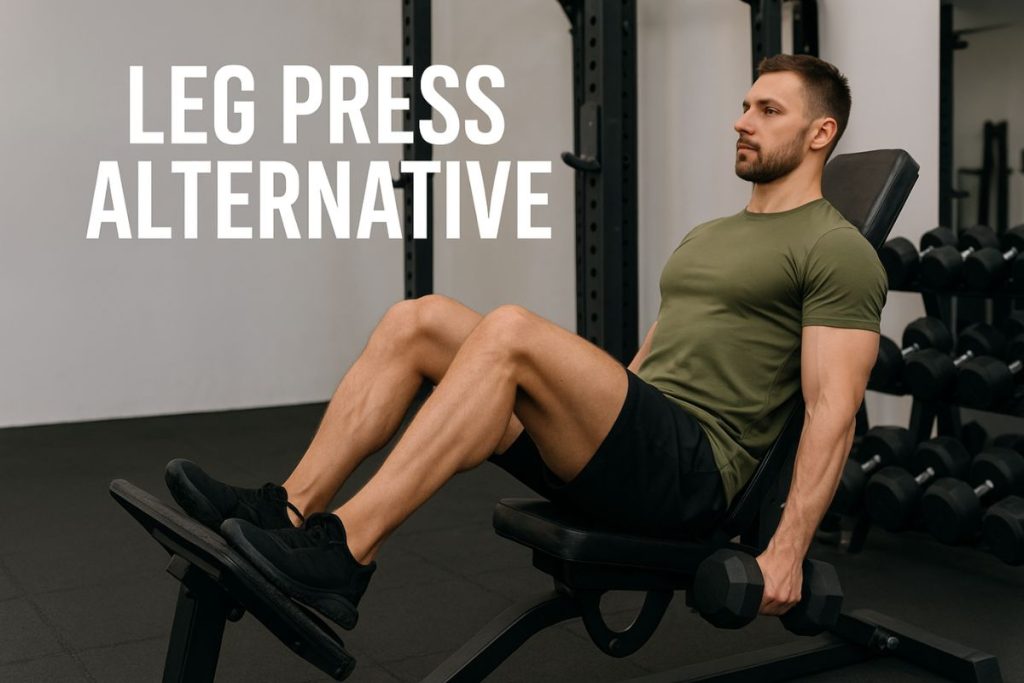
Leg strength is essential for everything from climbing stairs to excelling in sports. The leg press machine is a popular way to build powerful quadriceps, hamstrings and glutes, but it isn’t always accessible whether you train at home or are nursing back or knee issues that make traditional leg presses uncomfortable. Fortunately there’s a world of leg press alternative exercises that deliver similar or even superior benefits. This in‑depth guide will explore gym‑based substitutes and creative at‑home workouts, compare the leg press to squats and other movements, and answer common questions so you can confidently choose the right alternative for leg press training.
Understanding the Leg Press and Why Alternatives Matter
The leg press is one of the most popular lower-body exercises in gyms worldwide. It allows users to load heavy weight safely while targeting major muscle groups in the legs, including the quadriceps, hamstrings, glutes, and calves. By sitting or lying on the machine and pressing the platform away from the body, you can achieve significant strength gains without requiring as much balance or core stability as free-weight movements.
What Is a Leg Press?
Before exploring leg press alternatives, it helps to understand how the exercise works. The leg press is performed on a seated machine where you push a weighted platform away with your feet. According to a GoodRx comparison of leg press vs. squat, leg presses are done while seated in a machine, whereas squats are done standing with body weight or free weights. The machine’s back support reduces the need for balance and allows you to lift heavy without stressing the spine. Because the movement path is fixed, your hips, knees and ankles move in a controlled range of motion.
Leg presses primarily target the quadriceps but also work the hamstrings, glutes and calves. Changing foot placement on the platform shifts emphasis between muscles. This compound movement is easy to learn, offers back support and allows heavy loading. However, it provides limited core activation and requires access to a machine.
Why Look for Leg Press Alternative?
There are several reasons to seek an alternative to leg press:
- Limited access: Home gyms rarely include a leg press machine. You might need an leg press alternative at home using minimal equipment.
- Balance and functional strength: Squats and other free‑weight movements engage the core and stabilizing muscles more than the leg press. If you want to build functional strength and balance, you need variety.
- Injury or discomfort: The leg press can be easier on the back compared to squats but may still feel uncomfortable for some. Alternatives let you target leg muscles with less joint stress.
- Training variety: Switching exercises prevents plateaus, improves athleticism and keeps workouts interesting.
Leg Press vs. Squat: A Brief Comparison
Squats and leg presses both build lower‑body strength but differ in execution. Squats involve standing, hinging at the hips and knees, and require balance and core engagement. GoodRx notes that squats have a larger range of motion and engage core and sometimes upper‑body muscles. Leg presses isolate the legs, offering support and allowing heavier loads. A 10‑week study comparing squat‑only, leg‑press‑only and combined training found that squats improved maximal squat strength more, but combining squats and leg presses enhanced dynamic balance. This suggests that including both free‑weight and machine exercises can improve performance.
Machine-Based Leg Press Alternatives
If you train in a commercial gym, there are multiple alternative to leg press machines that mimic the movement pattern while offering unique benefits. Each option can be adjusted to your fitness level.
Hack Squat Machine
The hack squat machine supports your back and guides you through a squat‑like movement. The StrengthWarehouseUSA article notes that it replicates the squat while supporting the back and reduces knee strain. Place your feet higher on the sled to emphasize the glutes and hamstrings or lower for more quad activation. Here’s how to use it as a leg press alternative:
- Load the machine and position yourself under the shoulder pads, feet shoulder‑width apart on the platform.
- Keep your back against the pad and unlock the safety handles.
- Lower yourself by bending the knees and hips until your thighs are parallel to the platform. Keep knees aligned with toes and avoid rounding your back.
- Press through your heels to return to the starting position.
This machine gives the same leg‑press feel but with a more upright torso and a fixed path. It’s ideal if you want to ease into free squats while preserving leg press alternative benefits.
Smith Machine Squat
Another alternative for leg press is the Smith machine squat. The bar moves along fixed rails, reducing the need for balance. StrengthWarehouseUSA notes that Smith machine squats create a controlled environment, reduce injury risk and target quads, hamstrings and glutes. To perform:
- Set the bar at shoulder height and stand underneath it, feet shoulder‑width apart.
- Unrack the bar and take a small step forward; this allows for a slightly reclined torso.
- Squat down by bending the knees and hips, maintaining a neutral spine. Descend until thighs are parallel or slightly below.
- Drive through your heels to return to the top.
Because the bar path is fixed, you can focus on pushing hard without worrying about balance. It’s an excellent leg press alternative at home if you have a Smith machine.
Belt Squat
The belt squat uses a belt around your hips connected to weight plates, allowing your hands and spine to remain free. According to StrengthWarehouseUSA, belt squats reduce spinal load while still targeting the quadriceps, hamstrings and glutes. The vertical loading eliminates upper‑body involvement, making it a great alternative to leg press for people with back or shoulder issues. Here’s how:
- Attach the belt around your hips and clip it to the weight stack or plate.
- Stand on the platform with feet shoulder‑width apart.
- Push your hips back and bend your knees to squat down until thighs are parallel.
- Drive through your heels to stand up, keeping your torso upright.
Machine Leg Extension
While not identical to the leg press, the leg extension isolates the quadriceps and mimics the knee‑extension component. The Hevy article notes that leg extensions match the range of motion of a leg press and place no stress on the back. To perform:
- Adjust the machine so the pad rests just above your ankles, with knees aligned with the machine’s pivot point.
- Sit upright, grasp the handles and straighten your legs by contracting the quadriceps.
- Squeeze at the top, then lower slowly.
Leg extensions are a good accessory but should not replace compound movements entirely. Combine them with free‑weight or bodyweight leg press alternatives for balanced development.
Free‑Weight Alternatives for Functional Strength
Free weights demand more coordination and core activation than machines, making them excellent leg press alternative options. They also improve functional strength for sports and daily activities.
Barbell Squat
The classic barbell back squat remains one of the best alternatives to the leg press. According to the Hevy article, barbell squats work the quadriceps, hamstrings, glutes, midsection and upper back more than the leg press and are more challenging to learn. To perform safely:
- Position a loaded barbell at shoulder height in a power rack. Step under and place it across your traps, gripping slightly wider than shoulder width.
- Unrack the bar and step back, feet about shoulder‑width apart and toes slightly out.
- Initiate the movement by pushing your hips back and bending your knees simultaneously. Keep your chest up and back neutral.
- Descend until your thighs are at least parallel to the floor. According to Harvard Health, proper squat form involves pointing knees, hips and toes forward, keeping the chest lifted, maintaining a neutral spine and engaging the core.
- Drive through your heels to stand back up, squeezing your glutes at the top.
Barbell squats are versatile: you can adjust stance width, use front or high‑bar variations to emphasize different muscles and progressively load heavier weight.
Goblet Squat
For those new to squatting or training at home with limited equipment, goblet squats are a brilliant alternative to leg press at home. They require holding a dumbbell or kettlebell at chest level. The Hevy article highlights that goblet squats force an upright torso, making the quadriceps work more. To perform:
- Hold a weight close to your chest with both hands, feet shoulder‑width apart.
- Push your hips back and bend your knees to squat down, keeping your chest up and elbows inside your knees.
- Descend until your thighs are parallel; then push through your heels to stand up.
Goblet squats are forgiving on the back and perfect for home workouts.
Bulgarian Split Squat
This single‑leg exercise requires placing one foot on an elevated surface (bench or step) behind you while performing a lunge‑like squat. It challenges balance, builds unilateral strength and reduces imbalances. The Hevy article notes that Bulgarian split squats train one leg at a time, reduce muscle imbalances and share muscle activation with the leg press. StrengthWarehouseUSA also highlights that the supported Bulgarian split squat targets the quadriceps, hamstrings, glutes and core while reducing joint strain. To perform:
- Stand about two feet in front of a bench. Place your rear foot’s laces on the bench.
- Keep your chest up and core engaged. Lower your body by bending the front knee and hip until the front thigh is parallel to the floor. Ensure the front knee stays aligned over the ankle, as recommended for proper lunge form.
- Push through your front heel to return to the starting position.
You can hold dumbbells or a barbell to increase resistance. This movement is excellent for home workouts when you need a leg press alternative at home.
Step‑Up
Stepping onto a raised platform strengthens the quads, glutes and stabilizers and is a functional movement that mimics climbing stairs. NASM mentions step‑ups as a way to build leg strength without squats. To perform:
- Stand facing a sturdy box or bench. Place one foot on top, ensuring the entire foot is supported.
- Press through the heel to step up, bringing the other foot to the platform.
- Step down with control and repeat with the opposite leg.
To make it harder, hold dumbbells or a barbell. Step‑ups are easy to incorporate into a HIIT or circuit routine and serve as a great leg press alternative.
Deadlift Variations
While not identical to a leg press, deadlifts build hamstrings, glutes, and back muscles. They train the posterior chain and complement quad‑focused exercises. Start with Romanian deadlifts or trap‑bar deadlifts if you’re new to the movement. Maintain a neutral spine and hinge at the hips, lowering the weight until you feel a stretch in the hamstrings before returning to the top.
Lunges and Lateral Movements
Lunges are a multi‑planar alternative for leg press that challenge stability and work the quads, glutes and hamstrings. Healthline notes that lunges engage these muscles without placing extra back pressure. They come in various forms:
- Forward lunges: Step forward and lower until both knees are at 90° angles. According to ACE Fitness, drop your hips toward the floor rather than driving forward, keeping your shinbone in a slight forward lean and your back neutralacefitness.org. Push off the front heel to returnacefitness.org.
- Reverse lunges: Step backward instead of forward, which can be easier on the knees.
- Walking lunges: Alternate forward lunges while moving across the room.
- Lateral lunges: Step to the side and push hips back, strengthening the inner and outer thighs.
Lunges are versatile, require no equipment and are effective leg press alternatives for home workouts.
Bodyweight & Plyometric Leg Press Alternatives
No gym membership? No problem. Bodyweight and plyometric exercises are accessible leg press alternative at home options that build strength and power using your own body.
Bodyweight Squat
Also known as the air squat, this movement uses your body weight for resistance. StrengthWarehouseUSA states that bodyweight squats engage multiple lower body muscles, promote functional strength and stability, and require no equipment. Proper form resembles the barbell squat but without load. Focus on depth and control, and gradually add resistance with a backpack or weighted vest.
Broad Jumps and Box Jumps
Plyometric exercises like broad jumps and box jumps develop explosive power and recruit fast‑twitch fibers. Healthline describes broad jumps as a high‑impact combination of a squat and full extension. To perform a broad jump:
- Stand with feet hip‑width apart and hinge at the hips, swinging your arms back.
- Explosively jump forward as far as possible, landing softly in a squat.
- Reset and repeat.
Box jumps are similar but involve jumping onto an elevated surface. The Hevy article emphasises that box jumps require minimal equipment and improve lower‑body power. Land softly with knees bent to absorb impact.
These exercises are advanced alternatives to leg press that boost athleticism; start with small jumps and progress gradually.
Assisted Pistol Squat
Pistol squats involve squatting on one leg while extending the other leg in front. They demand considerable mobility and strength, making them a challenging leg press alternative. Hevy explains that assisted pistol squats train one leg at a time, supporting your body weight entirely and requiring good ankle mobility. To perform an assisted version:
- Stand near a support (pole, TRX strap or doorway) and extend one leg forward.
- Hold the support and slowly lower into a squat on the standing leg, keeping the elevated leg straight.
- Push through the heel to stand back up, using the support as needed.
Over time you can reduce assistance or progress to full pistol squats. This exercise is ideal when you need a challenging leg press alternative at home without heavy equipment.
Glute Bridge and Hip Thrusts
The bridge exercise works the glutes, hamstrings and core and requires nothing but the floor. Healthline notes that the bridge strengthens the core, butt and thighs and works muscles similar to leg presses. To perform a glute bridge:
- Lie on your back with knees bent and feet hip‑width apart. Arms rest by your sides.
- Lift your hips by pressing through your heels until your body forms a straight line from shoulders to knees.
- Squeeze your glutes at the top and slowly lower back down.
To increase difficulty, perform single‑leg bridges or hip thrusts with your shoulders elevated on a bench and weight across your hips.
Wall Sit
A wall sit is a static leg press alternative that challenges your quadriceps. Simply lean your back against a wall and slide down until your knees and hips form 90° angles. Hold for 30-60 seconds, keeping knees aligned over ankles. Increase time as you get stronger.
Stair Climbing and Hill Sprints
Running or walking up stairs or hills engages the glutes, quads and calves while improving cardiovascular fitness. These activities replicate the knee extension and hip extension components of a leg press. They’re convenient alternatives for leg press that also burn calories.
Resistance Band Alternatives
Resistance bands are portable and versatile tools that provide progressive resistance, making them excellent leg press alternative at home options.
Resistance Band Leg Press
Healthline describes the resistance band leg press as a machine‑free exercise that replicates the leg press movement. You’ll need a long looped band and a sturdy anchor, such as a door or heavy furniture. Instructions:
- Loop the band around both feet and lie on your back with knees bent. Hold the band handles or ends at your chest.
- Push your feet away, extending your legs against the resistance until they are straight.
- Slowly return to the starting position.
This movement works the quads, hamstrings, glutes and calves and is perfect for home workouts when you need an alternative for leg press.
Spanish Squat
The Spanish squat targets the quadriceps with minimal knee stress. The Hevy article explains that this exercise uses bands to maintain vertical shins and trains the quads without stressing the knees; it’s recommended for those with patellofemoral pain. To perform:
- Anchor a resistance band behind you at knee height and loop it around the back of your knees.
- Stand facing the anchor, step back to create tension and squat down while keeping your torso upright and shins vertical.
- Push back to the start position without letting your knees travel forward.
Banded Squats
Band‑assisted squats add resistance as you stand, emphasizing the quads at the top. Hevy notes that band squats provide gradually increasing resistance and have a similar movement pattern to the leg press. Loop a band under your feet and over your shoulders and perform a normal squat. The band tension increases as you stand, challenging your quadriceps while remaining gentle on your joints.
At‑Home Leg Press Alternatives Without Equipment
You don’t need machines or weights to build strong legs. These leg press alternative at home options require little to no equipment and are ideal for apartments, travel or outdoor training.
Chair or Couch Squat
Using a chair or couch as a reference point helps beginners learn proper squat depth and builds leg strength without machines. Sit back onto the chair and stand up repeatedly, focusing on driving through your heels and keeping your torso upright. Once you master the movement, progress to unassisted squats.
Single‑Leg Wall Sit
Advance the wall sit by performing it on one leg. Keep one foot flat against the wall and extend the other leg forward or rest it lightly on top of the supporting leg. This increases demand on the quadriceps and challenges balance.
Backpack Weighted Squat or Lunge
Fill a backpack with books or water bottles to create an inexpensive weight for squats and lunges. This is a practical alternative for leg press that allows progressive overload at home. Always secure the backpack straps to prevent shifting.
Towel Hamstring Curl
Lie on a smooth floor with a towel under your feet. Bridge your hips up and slide your feet out, then curl them back in. This exercise targets the hamstrings and glutes and can be paired with bodyweight squats for a balanced workout.
Improvised Step‑Ups
Use a staircase, sturdy chair or tree stump for step‑ups. Perform 3-4 sets of 8-12 repetitions per leg. Increase the challenge by holding household objects like jugs of water or wearing a weighted backpack.
How to Choose the Right Alternative
Selecting the best leg press alternative depends on your goals, experience level and equipment availability. Consider the following factors:
- Training goal: If you aim to increase maximal strength, choose free‑weight movements like barbell squats or belt squats. If hypertrophy is your goal, combine machine and free‑weight exercises for varied stimulus.
- Injury history: For knee or back pain, select exercises that reduce joint stress, such as leg presses, belt squats, Spanish squats or resistance band leg presses. Consult a healthcare professional before starting.
- Experience level: Beginners may prefer machine‑based or goblet squats, which are easier to learn. Experienced lifters can incorporate more challenging movements like barbell squats, lunges and plyometrics.
- Equipment access: If you train at home with limited equipment, focus on bodyweight, band exercises and creative loading like backpacks or water jugs. Gym members can use machines, free weights and cables.
- Variety and progression: Rotate between leg press alternatives to avoid plateaus and address all muscle groups. For example, pair heavy squats with lunges one day and banded presses with plyometrics another.
Common Mistakes and Form Tips
Executing exercises correctly enhances results and reduces injury risk. Keep these cues in mind:
- Maintain neutral spine: Whether squatting, lunging or using a machine, keep your chest up and back flat.
- Align knees and toes: Avoid letting knees collapse inward; they should track in line with your toes.
- Engage your core: Brace your abdominal muscles to support the spine during all leg press alternative movements.
- Control the descent: Lower under control rather than dropping quickly; this increases time under tension and reduces joint stress.
- Use full range of motion: Aim to lower until thighs are parallel (or lower if mobility allows) to maximise muscle activation.
- Progress gradually: Increase weight or resistance slowly to avoid overuse injuries. StrengthWarehouseUSA emphasises easy weight adjustments and controlled environments for beginners.
Frequently Asked Questions (FAQ)
What is the best leg press alternative at home?
When you lack gym machines, compound exercises like goblet squats, lunges, Bulgarian split squats and resistance band leg presses are excellent choices. They require minimal equipment and target the same muscle groups as a machine leg press. Bodyweight squats, step‑ups, glute bridges and improvised weighted backpacks also serve as effective leg press alternative at home exercises.
Is the leg press a good alternative to squats?
The leg press isolates the lower body and provides back support, making it ideal for beginners or those with back issues. However, it doesn’t engage the core and stabilizers as much as squats. Incorporating both can yield balanced strength and functional fitness. For some lifters, yes, the leg press is a viable alternative to squats but it shouldn’t entirely replace free‑weight movements.
Which muscles do leg press alternatives work?
Most leg press alternatives target the quadriceps, hamstrings, glutes and calves. Exercises like goblet squats and lunges also engage the core and hip stabilizers. Plyometric alternatives recruit fast‑twitch muscle fibers and improve power, while banded exercises provide constant tension throughout the movement.
How often should I train leg press alternatives?
Training frequency depends on your goals and recovery. For general strength, 2-3 leg sessions per week with rest days between them suffice. Vary exercises combine heavy lifts like barbell squats with lighter movements like lunges or banded presses. Always listen to your body and adjust volume based on soreness and fatigue.
What is an alternative for leg press if I have knee pain?
If knee discomfort is an issue, choose exercises that minimize knee stress. Spanish squats keep the shins vertical and reduce patella femoral stress. Belt squats and leg presses are also gentler on the knees because they allow vertical loadin. Always consult a physical therapist before starting a new program.
Can I build strong legs without a leg press machine?
Absolutely. Free‑weight squats, lunges, Bulgarian split squats, step‑ups, deadlifts, resistance band presses and bodyweight movements collectively build strong and functional legs. Studies show that both squat and leg press training improve functional outcomes, with specific transfer depending on the task. Thus, you can achieve muscular legs using a variety of leg press alternatives.
Are leg press alternatives suitable for beginners?
Yes. Beginners can start with bodyweight squats, goblet squats, step‑ups and resistance band leg presses. These movements are easier to learn and provide back support. As skills and strength improve, progress to barbell squats, lunges and plyometric exercises. The key is mastering form before adding resistance.
How do I progress with at‑home leg press alternatives?
Gradually increase difficulty by:
- Adding resistance: Hold dumbbells, kettlebells or a weighted backpack.
- Increasing volume: Perform more sets or reps.
- Adjusting tempo: Slow down the lowering phase to increase time under tension.
- Advancing variations: Move from bilateral to unilateral exercises (e.g., Bulgarian split squat) or incorporate bands.
Progressive overload ensures continued gains even without machines.
Conclusion
There’s no shortage of effective leg press alternative exercises. Whether you have access to gym machines, free weights, resistance bands or just your body weight, you can train your legs safely and efficiently. Machine‑based options like hack squats, Smith machine squats and belt squats replicate the leg press while offering varied stimulus. Free‑weight movements such as barbell squats, goblet squats and Bulgarian split squats build functional strength and engage stabilizing muscles. Bodyweight and plyometric exercises broad jumps, box jumps, glute bridges and lunges provide convenient leg press alternatives at home. Resistance bands add another layer of progression, with Spanish squats and banded presses delivering joint‑friendly tension.
Ultimately, the best leg program combines multiple alternatives to leg press tailored to your goals, experience and equipment. By rotating exercises, focusing on proper form and gradually increasing load, you’ll build powerful legs, improve balance and reduce injury risk. Use the information in this guide to craft workouts that keep you motivated and move you closer to your strength and fitness goals.
Previous Post: Mirror Exercises, Exercise Pulleys, Squint Exercise