High amine foods can sound concerning, but understanding them is easier with the right information. In this guide, we’ll explain what amines are, why certain foods (like aged cheese and wine) have higher amine levels, and what health impact they can have. We’ll also discuss amino acids the building blocks of protein and highlight foods rich in essential amino acids. If you’re curious about amine sensitivity or how to eat a balanced diet, read on for science-backed tips and practical advice.
What Are Amines and Why Do They Matter?
Amines are naturally occurring compounds that form when proteins in foods break down over time. As foods age, ferment, or ripen, protein molecules release amine compounds like histamine, tyramine, and phenylethylamine. For example, processed meats, organ meats, fermented foods, soy sauce, and cheeses tend to have higher levels of these amines. While our bodies normally process small amounts of dietary amines, eating large quantities of high-amine foods can trigger reactions (especially in sensitive individuals).
Not to be confused with amino acids, amines have distinct effects. Amino acids are the beneficial components of proteins that your body needs for muscle repair, immunity, and more. By contrast, amines (such as histamine) can sometimes cause headaches, high blood pressure, or skin flare-ups in those with amine sensitivity. In short, foods high in amines should be managed carefully, but foods high in amino acids (healthy proteins) are often very nutritious.
Amines vs. Amino Acids
It’s easy to mix up “amines” with “amino acids” because both words sound similar. However, amino acids are the good stuff in proteins (each amino acid helps build muscle, enzymes, and more), whereas amines are byproducts formed when proteins age or ferment. Think of amines as a sign of food ripening or processing, not as nutrients. Common dietary amines include histamine (found in aged tuna or fermented wine) and tyramine (found in aged cheeses and cured meats). If your body can’t break down excess amines efficiently, you may experience discomfort after eating certain foods.
Common High Amine Foods to Watch
Eating certain foods can flood your body with amines at once. Some categories to watch include:
Aged Cheeses and Dairy
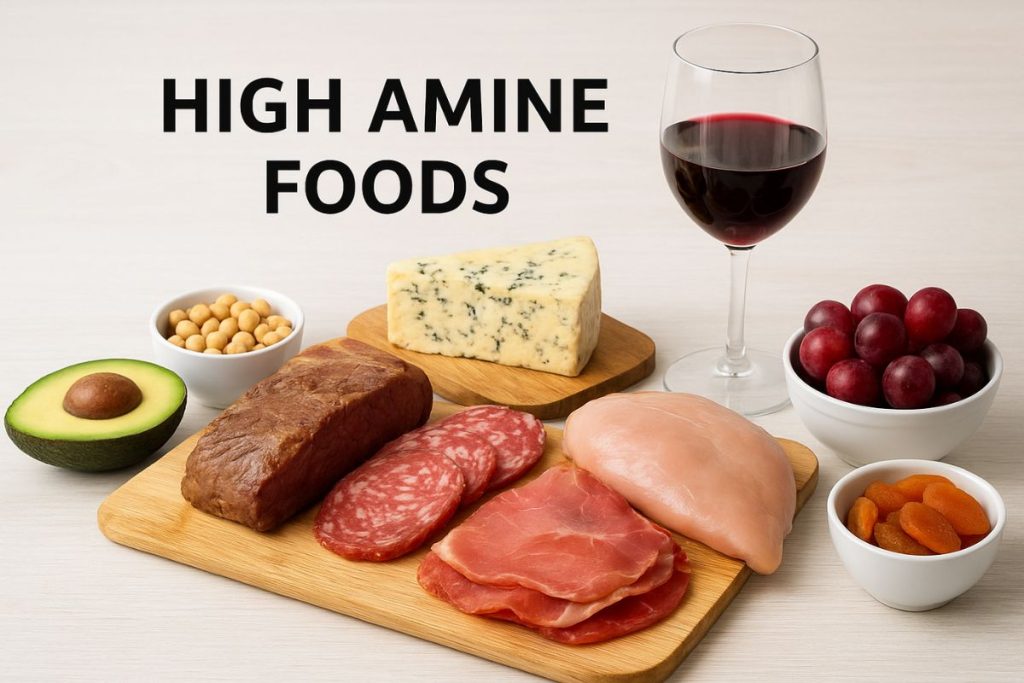
Cheeses that are aged or fermented tend to accumulate large amounts of amines like tyramine and histamine. Examples include cheddar, blue cheese, Gouda, and Parmesan. Even processed cheese products (pizza cheese, cheese spreads) can contribute. These amines develop as cheese ferments over time. On the other hand, fresh soft cheeses (e.g. ricotta, cream cheese) usually have lower amine levels. If you have symptoms, stick to younger cheeses or opt for yogurt and cottage cheese instead, as these have far fewer amines.
Cured and Processed Meats
Highly processed meats are a major source of dietary amines. Ham, bacon, salami, pepperoni, hot dogs, sausages, and pâté are all rich in tyramine because they are cured and often smoked. The curing and aging process allows bacteria to break down proteins into amines. Freshly cooked meats (chicken, turkey, beef, pork) contain far fewer amines, so favor these in your diet instead of deli cuts or smoked varieties.
Fermented Foods and Soy Products
Fermented foods are nutritious but can be high in histamine and other amines. Sauerkraut, kimchi, kombucha, miso, and kefir are examples of fermented products with amines. Soy sauce, tamari, natto, and tempeh (fermented soy) also have increased amine content. Even some bean products (fava beans, lentils, miso soup) can trigger symptoms. If you’re susceptible, limit fermented condiments and try fresh herbs (like basil, cilantro, parsley) or small amounts of vinegar sparingly as flavor enhancers.
Alcoholic, Caffeinated, and Other Beverages
Alcohol is a well-known high-amine trigger. Red wine, beer, champagne, and sake can all provoke headaches or flushing. Distilled spirits have fewer amines, but mixers can add other triggers. Caffeine itself (coffee, tea, cola) is not an amine but can worsen migraine symptoms, so consume caffeinated drinks in moderation. Dark chocolate and cocoa contain phenylethylamine and small amounts of caffeine, so limit these treats as well.
Ripe Fruits and Other Triggers
Some fresh fruits contain amines when overripe. Avocado, banana, pineapple, raisins, figs, plums, and tomato can trigger symptoms if very ripe. Dried fruits (apricots, dates, raisins) concentrate these compounds. Other individual triggers may include aged beans or lentils, soy products, and certain nuts (peanuts, walnuts) if stale. It helps to note which fruits and snacks you enjoy and try eating them a bit earlier (e.g. a slightly underripe banana) to reduce amines.
By recognizing these high amine foods and limiting intake, you can greatly reduce unexpected reactions. Always read labels: anything labeled “aged,” “smoked,” or “cured” is a hint that amines may be present in higher amounts.
High Amine Foods and Health Effects
When amine levels in the body rise too quickly, they may produce unpleasant symptoms. People with amine sensitivity or migraines often find that high-amine foods can trigger their headaches. Histamine, in particular, is involved in immune responses and can cause symptoms similar to allergic reactions. If your body’s histamine-degrading enzyme is low or overwhelmed, histamine accumulates and can lead to flushing, hives, runny nose, or rapid heartbeat.
Medical experts note that amine sensitivity can manifest in many ways. Some individuals experience skin symptoms like eczema, while others feel like having a hangover after eating trigger foods. In migraine-prone people, tyramine and histamine are common dietary triggers. For example, doctors may suggest a trial of a four-week low-amine elimination diet to see if migraines improve. Additionally, certain medications (like MAO inhibitor antidepressants) can interact dangerously with high-amine foods, so these foods are strictly avoided by patients on those drugs.
Each person’s threshold is different. Small amounts of a favorite food (say, a slice of Parmesan) might be fine if you usually balance it with safe foods. However, overeating high-amine foods or combining many triggers in one meal can push your levels up suddenly. If you notice that skipping high-amine foods (cheese, wine, chocolate) reduces your headaches or heartburn, then it is wise to keep those foods to a minimum.
Foods High in Amino Acids: Building Blocks of Diet
Getting enough amino acids is essential for health. Unlike amines, amino acids are the helpful nutrients that our body uses to build muscle, enzymes, and hormones. When you eat protein, your body breaks it into amino acids. Eating a variety of high-protein foods ensures you receive all 20 amino acids, including the nine essentials you cannot make yourself.
Here are some examples of amino acid-rich foods (with approximate protein content):
- Chicken breast: about 31g protein per 100g; lean and high in lysine.
- Lean beef: about 26g protein per 100g; rich in iron and essential amino acids.
- Greek yogurt: about 10g protein per 100g; also provides calcium and probiotics.
- Cottage cheese: about 11g protein per 100g; a low-amine cheese alternative.
- Eggs: about 6g protein per large egg; contain all essential amino acids.
- Lentils (cooked): about 9g protein per cup; high in fiber and folate.
- Quinoa (cooked): about 8g protein per cup; a complete plant protein.
- Almonds: about 21g protein per 100g; also rich in healthy fats and vitamin E.
Eating a rainbow of protein-rich foods ensures you get a wide range of amino acids. For example, lean meats, dairy, eggs, fish, legumes, and nuts are all high in amino acids. Including these foods in your diet provides essential nutrients without the excess amines found in aged or processed foods.
Proteins do more than just build muscle. For instance, branched-chain amino acids (leucine, isoleucine, valine) from foods like meat and dairy can directly fuel muscles during exercise. Other amino acids are used to produce neurotransmitters and immune cells. To maximize benefit, spread protein sources throughout the day. Have eggs or yogurt at breakfast, lean meat or legumes at lunch, and fish, poultry, or tofu at dinner. Snacks like nuts or cottage cheese can boost your intake. This way, you meet your nutritional needs from high-amino acid foods without overloading on amines.
Foods Rich in Lysine (Key Amino Acid)
Lysine is an essential amino acid that helps build protein, collagen, and antibodies. It’s important for growth, immunity, and tissue repair. Foods rich in lysine include lean meats (beef, chicken, pork), fish and seafood (salmon, tuna, shrimp), eggs, dairy products (yogurt, milk, cheese), and legumes (beans, lentils). For example, a 100 gram serving of lean beef provides about 3 grams of lysine. Including these foods in your diet ensures you get enough lysine for overall health and recovery.
High-Amino Acid vs High-Amine Foods
It helps to clearly differentiate these categories:
- High-Amino Acid Foods: Nutrient-rich protein sources (fresh meats, fish, eggs, dairy, and legumes) that support health and growth. These foods are generally safe and beneficial to eat.
- High-Amine Foods: Typically aged or fermented products where proteins have broken down into amines (for example, cured sausage versus grilled chicken breast).
By choosing fresh proteins and a variety of plant proteins, you can enjoy a diet high in amino acids without the headaches from high-amine foods.
High Amine Foods and Migraines
Migraines are a common reason people investigate their diet. Many patients report certain foods trigger their headaches. Amines, particularly histamine and tyramine, are known culprits. In fact, medical guidance often recommends that those with chronic migraines try avoiding high-amine foods (like aged cheese, cured meats, and wine) for a period to see if symptoms improve. While research varies, many migraine sufferers significantly reduce their headache frequency by following a low-histamine, low-tyramine diet. Keeping a headache diary alongside your food log can help identify if specific amine-rich foods are triggers for you.
Histamine Intolerance
Histamine intolerance is a condition where the body cannot break down histamine properly, making high-histamine foods particularly problematic. Symptoms include digestive upset, headaches, rapid heartbeat, and skin flushing (which often mimic allergies). In practice, a histamine intolerance diet eliminates foods like sauerkraut, cured meats, shellfish, and tomatoes for several weeks, then reintroduces them gradually to see which ones cause reactions. Vitamin C and vitamin B6 supplements are sometimes recommended to help metabolize histamine, but always discuss with a healthcare provider. Proper meal planning and fresh ingredients are key to managing histamine intolerance.
Dietary Tips: Managing High Amine Intake
If you need to limit high amine foods, try adopting these strategies for an amine-friendly diet:
Select Fresh Over Processed
Choosing fresh ingredients is the simplest way to avoid excess amines.
- Fresh Meats and Fish: Buy fresh cuts of chicken, turkey, beef, or fish. Freeze leftovers promptly. Fresh meat has very little amine because the proteins have not broken down much. In contrast, deli meats, jerky, and smoked sausages should be limited.
- Fresh Dairy Options: Use fresh (unfermented) dairy. Plain milk, yogurt, or cottage cheese contain protein but low amines, whereas aged cheeses or sour cream have higher levels.
Smart Cooking and Storage
How you cook and store food can affect amine levels.
- Cooking Methods: Avoid charring or over-grilling meats, as browning increases amines. Marinating fish or meat in lemon juice or vinegar before cooking can help reduce histamine formation.
- Refrigeration and Freezing: Store foods at 4°C (40°F) or below and use them quickly. Freeze fish or poultry immediately if you won’t eat it soon. Reheat leftovers only once or twice and then discard to prevent amine build-up.
Balanced Meal Planning
Maintaining overall balance helps too.
- Eat complex carbohydrates (whole grains, veggies) with each meal. Carbs help slow the absorption of amines, reducing symptom spikes.
- Do not skip meals. Eat at regular intervals to prevent hunger-related headaches.
- Hydrate well: Adults should aim for 8-10 cups of water daily. Proper hydration supports metabolism and may ease migraine risk.
- If you drink alcohol, alternate with water or a decaffeinated, non-citrus mixer.
- Read ingredient labels on packaged foods: anything containing “yeast extract,” “hydrolyzed protein,” or “cured/fermented” should be evaluated carefully.
By focusing on fresh, unprocessed proteins and good eating habits, you can get enough nutrients from foods high in amino acids while keeping high-amine foods in check.
Sample Low-Amin Foods Meal Plan
To help you apply these tips, here’s an example of a day’s worth of eating on a low-amine diet:
- Breakfast: Oatmeal made with water or milk, topped with fresh blueberries and Greek yogurt. (Optional: sprinkle with ground flaxseed or protein powder.)
- Mid-Morning Snack: A banana or apple with a small handful of almonds.
- Lunch: Grilled chicken breast (fresh, not processed) on a large mixed salad (lettuce, cucumber, bell pepper) with olive oil and lemon. Add avocado for healthy fats.
- Afternoon Snack: Cottage cheese with sliced pear, or carrot sticks with hummus.
- Dinner: Baked salmon or tofu with quinoa and steamed broccoli. Season with fresh herbs (parsley, rosemary) and lemon.
- Evening: Chamomile tea (no caffeine) and a rice cake if needed.
This plan skips high-amine triggers (no cured meats, cheese, or wine) and emphasizes lean proteins, veggies, and whole grains. All items listed are also high in amino acids (protein), ensuring you meet your nutritional needs even while avoiding excess amines. Feel free to swap proteins and vegetables to suit your tastes.
Vegetarian and Vegan Considerations
Vegetarian and vegan diets can also intersect with amine issues. Plant foods naturally contain few amines, but watch out for fermented or aged products (e.g. fermented tofu or miso, pickles, and soy sauce). Good plant protein sources include lentils, chickpeas, beans, quinoa, nuts, and seeds. Combine grains with beans (like rice and beans, or hummus with pita) to form complete proteins. Fresh tofu (not fermented tempeh) and edamame are good low-amine soy options. For vegetarian meals, try salads with quinoa and peas, or a stir-fry with fresh vegetables and tofu. Focus on fresh whole foods and check all labels (for example, some vegan cheeses or mock meats can be high in amines if fermented).
Low-Amin Selections for Meals
Here are some low-amine substitutes you can use:
- Cheese: Choose fresh mozzarella, ricotta, cottage cheese, or nutritional yeast instead of aged cheeses.
- Meat substitutes: Fresh turkey or chicken instead of ham or sausage; grilled fish instead of smoked or canned.
- Condiments: Use balsamic vinegar sparingly; avoid soy sauce and yeast extracts.
- Snacks: Fresh fruit, plain yogurt, and unsalted nuts instead of processed snacks.
FAQs About High Amine Foods
Q: What are high amine foods?
A: High amine foods contain large amounts of natural compounds like histamine and tyramine. These usually are aged, fermented, or preserved foods. Examples include aged cheeses, fermented soy (soy sauce, tempeh), cured meats, dried fish, sauerkraut, and alcoholic beverages. Ripe fruits like banana and avocado can also be high in amines. These foods may trigger symptoms (headaches, flushing) in sensitive people.
Q: Who should avoid high amine foods?
A: Anyone can try avoiding them, but it’s most helpful for people with migraines, headaches, high blood pressure or certain allergies. People diagnosed with histamine intolerance often follow a low-amine diet to reduce flushing and digestive issues. Even those on certain medications (MAO inhibitors) must avoid tyramine-rich foods to prevent dangerous blood pressure spikes. If you find headaches or skin reactions after eating high-amine foods, consider reducing them temporarily and monitoring any improvements.
Q: What foods are high in amino acids?
A: Foods high in amino acids are basically high-protein foods. This includes meats (chicken, turkey, pork, beef), fish and seafood (salmon, tuna, shrimp), eggs, dairy products (milk, yogurt, cottage cheese), beans and legumes (lentils, black beans, chickpeas), and nuts and seeds (almonds, peanuts, pumpkin seeds). Grains like quinoa are also rich in protein. Eating a variety of these ensures you get all essential amino acids.
Q: What foods are high in amino acid lysine?
A: Lysine is abundant in animal proteins. Good sources include lean meats (beef, chicken, pork), fish, eggs, and dairy (especially cheese and yogurt). Legumes (like beans and lentils) and quinoa also provide lysine. For example, lean beef and chicken can provide about 3 grams of lysine per 100g serving. Adequate lysine intake supports immune function, collagen production, and overall health.
Q: Are all cheeses high in amines?
A: Yes. In general, any aged cheese will be high in tyramine and histamine. Even “aged” versions of soft cheeses count. Only very fresh cheeses (cottage cheese, cream cheese, ricotta, mozzarella) have low amine levels. If you need cheese flavor, use a small sprinkle of a mild aged cheese on a large salad to keep the total amine load small.
Q: What if I accidentally eat a high-amine food?
A: Don’t panic. Drink plenty of water, and rest if you can. You might take an over-the-counter antihistamine or pain reliever if a headache occurs. Symptoms often pass once the food is digested. Keep a record of what you ate and how you felt; this can help identify triggers over time.
Q: How quickly do amine sensitivity symptoms appear?
A: Symptoms can appear anywhere from a few minutes to a few hours after eating a trigger food. Some people notice immediate effects, while others may have delayed reactions. If you suspect a specific food is causing issues, try avoiding it for a few days and see if symptoms improve.
Q: Can children have amine sensitivity or histamine intolerance?
A: It’s less common but possible. Children with migraines, allergies, or eczema might be more affected by dietary amines. If you suspect a child is sensitive, focus on fresh whole foods and track their reactions. Always consult a pediatrician before making significant diet changes for a child.
Q: How long should I avoid high-amine foods?
A: A common recommendation is to follow a strict low-amine diet for 4-6 weeks and monitor symptoms. After that, you can gradually reintroduce foods one at a time (every 2-3 days) to see which ones cause reactions. This elimination-challenge method can pinpoint specific triggers.
Q: Can supplements help with high-amine sensitivity?
A: Some people use supplements like vitamin C or quercetin to support histamine breakdown, and digestive enzyme (DAO) supplements specifically target histamine in the gut. The evidence is mixed, so it’s best to talk to a healthcare provider before adding supplements. They can help ensure you still get necessary nutrients while on a restrictive diet.
Additional Notes About High Amine Foods
- Carcinoid Tumors (NET): Patients with carcinoid syndrome are often advised to avoid high-amine foods to prevent flushing. In fact, medical nutrition guidelines list aged cheeses, alcohol, smoked meats, and certain fruits (banana, avocado) in the high-amine category that should be avoided during carcinoid flushing. These lists can also serve as examples of high-amine foods to limit if you experience similar symptoms.
- Scombroid Fish Poisoning: This condition happens when spoiled fish (often tuna or mackerel) produce high histamine levels. It can cause immediate flushing, headache, and stomach upset. Proper refrigeration and cooking of fish prevents this, highlighting why keeping protein-rich foods fresh is important.
- Other Factors: Stress, hormones, and sleep can affect migraines and histamine tolerance. General health measures (good sleep, stress management, hydration) complement a low-amine diet. Also, amine reactions are not the same as classic food allergies; they usually cause headaches and flushing rather than throat swelling or anaphylaxis.
- Emphasize fresh whole foods. A diet rich in fruits, vegetables, and unprocessed proteins naturally keeps amines low.
- Rotate proteins: Vary your protein sources to avoid repeat exposure to any one high-amine food.
- Balance nutrition: Even on a low-amine diet, aim for all nutrient groups (protein, fiber, vitamins). For any food removed, substitute another healthy alternative.
- Listen to your body: Use a food and symptom diary to pinpoint triggers. High amine sensitivities are highly individual.
Most importantly, maintain a positive mindset. The goal is flexibility, not strict restriction. By focusing on nutrient-rich, fresh ingredients and listening to your body, you can enjoy flavorful meals without unnecessary triggers.
Conclusion
High amine foods such as aged cheeses, cured meats, fermented soy products, and some alcoholic drinks can cause headaches and other symptoms in sensitive individuals. Understanding why these foods are high in amines (protein breakdown during aging or fermentation) can help you manage your diet smarter. The good news is that foods high in amino acids (fresh meats, fish, eggs, legumes, and dairy) are generally safe and nutritious. By choosing fresh, whole foods and a variety of protein sources, you can enjoy a healthy diet that avoids excess amines.
If you suspect high amine foods affect you, consider trying an elimination diet or keeping a food diary to track triggers. Always consult a healthcare provider or registered dietitian for personalized advice. Did you find this guide helpful? Share it with others, and let us know your tips or experiences with high amine foods in the comments below. Your insight could help someone else improve their diet and well-being!
Sources: Authoritative nutrition guides and clinical resources
Previous Post: Macro Friendly Fast Food, Kids Probiotic Gummies, Food for Hair Shampoo