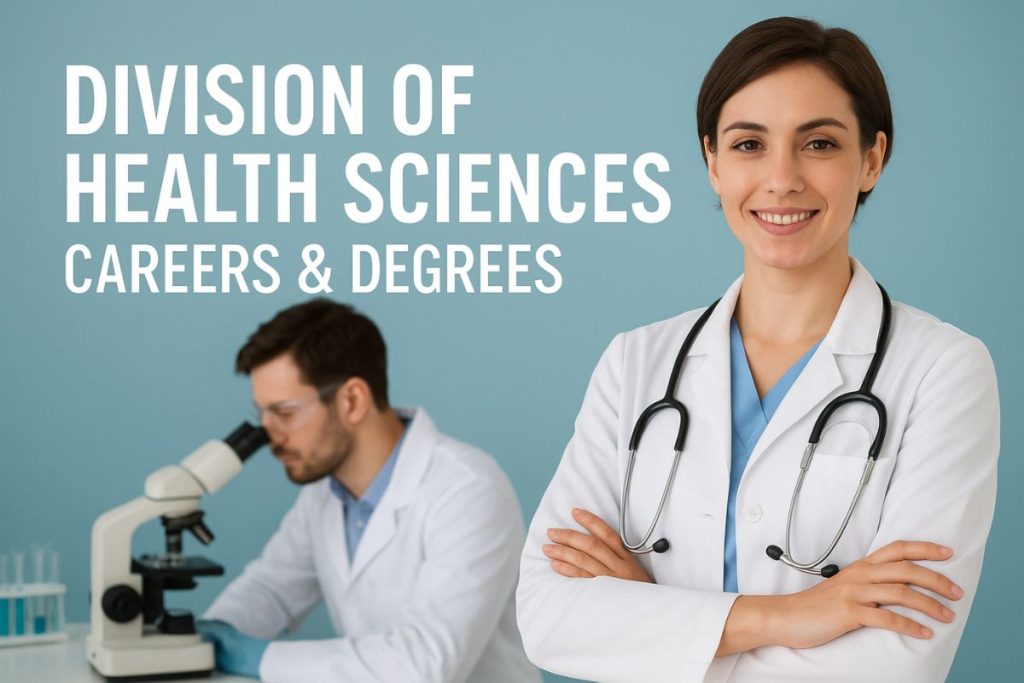
An undergraduate health sciences degree provides a broad foundation in healthcare and wellness, blending biology, anatomy, physiology, sociology, and health policy. This versatile degree prepares graduates for many roles in healthcare. Whether your passion lies in public health science, biomedical research, or clinical settings, a health sciences program can equip you with the knowledge and skills to start a career in health services. According to Ohio State University, “graduates of a health sciences bachelor’s degree are prepared for entry-level roles in a variety of health-related services”. Many students use this degree as a stepping stone to medical, dental, or graduate school. In an era of growing demand for healthcare workers, earning a health sciences degree can unlock diverse health sciences jobs across education, research, administration, and patient care.
An online or campus bachelor in health sciences typically covers core science courses and introduces students to the healthcare system’s organization, ethics, and policies. For example, Ohio State’s program description notes that students “gain an extensive overview of the healthcare system, including its organization, policies, and ethical considerations. Students also develop or build upon their foundation in biology, anatomy, physiology, and sociology. This broad interdisciplinary study readies graduates for public health science, clinical roles, or even further studies in fields like medicine or nursing. The flexibility of many health sciences programs means students can often tailor their education toward biomedical science careers, healthcare management, or public health, and pursue online health science degrees if they need flexibility.
Why Choose a Health Sciences Degree?
Health sciences degrees are flexible and job-oriented. They teach critical thinking about health systems while covering scientific fundamentals. This combination meets a key industry need: graduates who understand both science and healthcare practice. For example, the Bureau of Labor Statistics (BLS) projects that overall employment in healthcare occupations will grow “much faster than the average for all occupations”, adding roughly 1.9 million openings per year from 2023 to 2033. In today’s healthcare environment, broadly trained graduates are in high demand. As Ohio State notes, “health care is rapidly changing” and there is “a critical need for broadly educated graduates with extensive knowledge of health care”.
A health sciences degree is also a great pre-med or pre-health program. It’s often considered one of the best majors for students interested in medical or health professional schools because it covers key prerequisites and offers hands-on experience. Many health sciences students go on to professional programs: graduates are “well-positioned to pursue graduate programs in medicine, dentistry, physical therapy, and occupational therapy and more.”. Even without further schooling, health sciences grads qualify for entry-level positions in healthcare settings.
Key reasons to pursue a health sciences degree:
- Broad career options: Graduates can enter roles in clinical care, research, healthcare administration, education, and more.
- High demand field: Healthcare jobs are growing rapidly (1.9M new job openings/year projected).
- Foundational knowledge: Curriculum covers anatomy, physiology, and health policy giving flexibility to specialize later.
- Path to advanced degrees: Prepares students for medical school, nursing school, public health degrees, etc..
- Flexible learning: Many programs offer online options, making it easier for working professionals or non-traditional students.
Health Sciences Degree Programs & Courses
A Bachelor of Science in Health Sciences (BSHS) or Bachelor of Health Science is the most common undergraduate credential. Programs vary by school but share similar core topics:
- Basic Sciences: Biology, Chemistry, Anatomy, Physiology building a science foundation.
- Health Systems: Courses on healthcare organization, policy, ethics, and law.
- Public Health: Studies in epidemiology, health promotion, and community health.
- Research Methods: Basics of medical research, biostatistics, and evidence-based practice.
- Communication Skills: Healthcare communication, patient education, and cultural competency.
Many programs allow specialization or electives in areas like biomedical science, healthcare administration, or clinical health sciences (for roles in labs or allied health). For instance, Ohio State’s online health sciences program includes training in “health promotion and disease prevention” and “medical ethics” to prepare students for diverse patient populations. Students often complete practicums or internships at hospitals, clinics, public health agencies, or labs.
Online vs On-Campus Health Sciences Degrees
Online health science degrees are increasingly popular. Accredited universities now offer fully online BSHS programs, ideal for working students. Ohio State, for example, touts that their online BSHS is ranked #5 nationally by U.S. News & World Report. The online format lets students schedule courses around jobs or family commitments. Online curricula typically match on-campus programs, covering the same labs (via simulations or local partnerships) and lectures. An online degree can be a convenient path to a health sciences career, as long as it’s regionally accredited.
Degrees Beyond the Bachelor’s
After a bachelor’s in health sciences, many pursue advanced degrees for specific careers. Examples include:
- Master’s in Public Health (MPH): For careers in epidemiology, health policy, or community health education.
- Biomedical Science Graduate Programs: For research or biotech industry roles.
- Doctoral Health Degrees: Medicine (MD/DO), Dentistry (DDS/DMD), Physical Therapy (DPT), etc., often require a health sciences or similar pre-med background.
Some schools also offer Associate degrees or certificates in clinical health sciences (e.g. medical lab technology, radiologic technology), which focus on hands-on patient care skills.
Tip: When choosing a program, look for accreditation by recognized bodies (e.g., CEPH for public health, CAAHEP for allied health). Check if the curriculum includes your areas of interest (like pharmacology for pharmaceutical careers, or lab courses for research roles).
Career Paths with a Health Sciences Degree
A health sciences degree opens doors to many health sciences jobs across various fields. Graduates may work directly with patients, contribute to healthcare research, or support public health initiatives. Some common career categories include:
- Clinical Health Professions: Jobs involving direct patient care (often requiring additional certification). Examples: Medical Laboratory Technician, Pharmacy Technician, Dental Hygienist, or supporting roles like Phlebotomist. For example, a Clinical Laboratory Technologist/Technician (who runs medical tests) requires a bachelor’s in a related field and has a median wage of $61,890. A Dietitian (bachelor’s degree) earns around $73,850. These roles apply scientific training in real-world healthcare.
- Allied Health Careers: Many health sciences grads leverage their degree into allied health. For instance, Occupational Therapy Assistants and Physical Therapy Assistants (requiring an associate’s plus experience) earn about $65,000 annually. Other roles include Home Health Aide, Athletic Trainer, or Health Interpreter. These positions support clinical teams and may require additional certification or licensure.
- Public Health and Community Health: With a focus on population wellness, public health roles include Epidemiologist, Community Health Educator, Public Health Specialist, or working at health departments. Public health workers design programs to prevent disease and promote health in communities. Graduates with a concentration in public health science can pursue careers in government agencies or NGOs. (The classic definition: “the art and science of preventing disease, prolonging life and promoting health through organized efforts of society”.) Public health professionals are vital in areas like outbreak response (e.g., COVID-19), health education campaigns, and policy-making.
- Healthcare Administration: Some roles involve managing healthcare facilities or programs. A health sciences degree can lead to positions such as Health Services Manager, Nursing Home Administrator, Health Information Manager, or Corporate Wellness Coordinator. These jobs often require both health knowledge and business skills. For example, Health Education Specialists (who design health programs for communities or organizations) earn an average of $62,000 and can advance into high-paying management roles (over $130k later in career).
- Medical and Pharmaceutical Sales: Graduates with strong science knowledge are qualified for roles selling medical devices, pharmaceuticals, or biotech products. Titles include Pharmaceutical Sales Representative, Medical Sales Associate, or Sales Manager. These jobs require understanding of medical terms and products. Sales reps in this field can make up to $100,000 per year on average, especially with experience.
- Clinical Research: Health science grads may work on clinical trials and studies as Clinical Research Coordinators or Assistants. They help run trials, manage patient data, and support the development of new treatments. These roles combine research skills and patient interaction.
- Education and Training: With experience, some health science professionals become Health Science Teachers or Trainers in high schools, colleges, or corporate settings. They teach subjects like human biology or healthcare tech to students and future healthcare workers.
Many of these career paths benefit from additional education or certification, but a health sciences degree provides the grounding to enter them. The U.S. Census reports that among healthcare-related degree holders, 61% work in practitioner or technical roles (nursing, therapy, tech positions), while others are in management, education, or administrative roles.
Health Sciences Job Titles and Examples
Here are some specific job titles and median salaries (U.S., 2024) relevant to health sciences graduates, drawn from BLS and industry data:
- Registered Nurse $77,600 (requires RN licensure, often via BSN).
- Medical Laboratory Technician $54,880 (associate’s or bachelor’s).
- Clinical Laboratory Technologist $61,890 (bachelor’s).
- Pharmacy Technician $43,460 (postsecondary certificate).
- Occupational Therapy Assistant $65,520 (associate’s).
- Physical Therapist Assistant $60,050 (associate’s).
- Health Educator $62,210 (bachelor’s).
- Health Services Manager $104,280 (bachelor’s or above).
- Biomedical Scientist/Medical Scientist $101,000 (master’s/PhD).
- Physician Assistant $130,000 (master’s).
- Nurse Practitioner $132,000 (master’s or DNP).
- Physician (M.D.) $242,000+ (doctorate).
These figures illustrate that salaries in healthcare vary widely by role and education level. Notably, advanced practice roles (PA, NP, MD) offer the highest earnings, but even entry-level practitioners (like radiologic technologists, dental hygienists) earn well above average. According to the BLS, the median wage for healthcare practitioners in May 2024 was $83,090, compared to $49,500 for all occupations, reflecting the higher pay in this field.
Health Sciences Education & Program Selection
When choosing a health sciences program, consider:
- Accreditation: Ensure the school and program are accredited by a recognized agency. For example, public health programs should be accredited by CEPH. Accreditation affects transfer credits, licensure eligibility, and financial aid.
- Curriculum Focus: Look at required courses. Does it cover areas you want (e.g., clinical lab skills, public health, healthcare management)? Some programs let you concentrate on particular tracks.
- Experiential Opportunities: Schools that offer internships, lab experiences, or partnerships with hospitals give hands-on learning.
- Faculty Expertise: Are faculty members clinicians, researchers, or educators? Ohio State’s program highlights multidisciplinary faculty (nurses, dietitians, therapists) to tailor your career path.
- Online vs In-Person: Decide if you need online flexibility or prefer on-campus labs. Online programs often still require fieldwork. For working adults, an online health science degree can be “flexible”, allowing scheduling around other commitments.
- Rankings and Reputation: While not everything, program rankings (like Ohio State’s #5 online BSHS) and reviews can indicate quality. Also check graduate outcomes like job placement rates.
Health sciences coursework can be demanding, so strong study skills and time management are important. If coming from a non-science background, you may need prerequisites. Many colleges offer foundational coursework in biology and chemistry before the major courses. Advisors can help plan your path: Ohio State suggests connecting with an enrollment advisor to tailor the degree to your goals.
Health Sciences Salary Outlook
Health sciences graduates generally enjoy strong employment prospects and competitive salaries, especially with experience or advanced credentials. Key points about compensation:
- Varies by Role and Education: Entry-level health science jobs (like assistants and technicians) typically pay mid-$40k to $60k range. For instance, a Medical Records Specialist makes ~$50,250, and a Licensed Practical Nurse around $62,340.
- Growth Potential: With a bachelor’s in health sciences, one can advance into management or further schooling. Health Services Managers earn a median of $104,280 (often requiring a master’s). The OSU article notes health education specialists can start at ~$62k and advance to $130k+.
- Advanced Degrees Boost Earnings: Professionals who continue (PA, NP, MD) see much higher pay. Physician Assistants average $130k, while physicians average $242k.
- Industry Median: A recent Census report shows the overall median annual wage for all healthcare-related degree holders was around $70,000. This is higher than the median for all fields ($66,000), reflecting the value of health science training.
For up-to-date salary data, the BLS Occupational Outlook Handbook is a good resource. For example, the BLS reports a $73,850 median for dietitians (bachelor’s) and $94,260 for dental hygienists (associate’s). As new healthcare technologies and aging populations drive growth, many health science careers continue to see salary increases.
Frequently Asked Questions
Q: What careers can I pursue with a health sciences degree?
A: Health sciences graduates can work as health educators, clinical lab technologists, research assistants, health services managers, community health workers, medical sales reps, and more. Some go into allied health (PT/OT assistants, lab techs), public health, or prepare for advanced clinical degrees.
Q: Is a health sciences degree worth it?
A: Yes, for many students. It provides a versatile education that opens doors in the fast-growing healthcare sector. With projected rapid growth and ~1.9M job openings per year, demand remains high. The degree is also a solid pre-med choice, positioning graduates for graduate or professional health programs.
Q: What is the difference between health science and public health degrees?
A: A health science degree often covers individual health and clinical topics broadly, whereas a public health degree (e.g. MPH) focuses on population health, disease prevention, and policy. Public health science addresses community-level issues (epidemiology, health promotion), while health sciences may include more biology and clinical practice. Many health science programs include public health courses, so they overlap significantly.
Q: Can I complete a health sciences degree online?
A: Yes. Many accredited universities offer fully online health sciences programs. Online degrees in health science provide the same core curriculum with flexible scheduling. For example, Ohio State offers a top-ranked online BSHS program. Online learning is ideal for working students, though it often includes virtual labs or local internships.
Q: How much can I earn after a health sciences degree?
A: Earnings vary widely. Entry-level clinical and support roles often start in the $40k-$60k range. The median salary for healthcare practitioners and technical roles (like RNs, lab techs) is about $83,090 (2024). Managers and specialists can earn six figures; e.g., health services managers median ~$104k. Advanced professionals (PA, NP, MD) can earn $130k-$242k. Overall, Census data show a $70,000 median for healthcare degree holders, above the national median.
Q: What’s the job outlook for health science-related fields?
A: Very positive. Healthcare occupations are growing faster than average for all jobs. Aging populations and advances in medicine drive this demand. Specifically, jobs like medical assistants, lab techs, health educators, and home health aides are in high demand. Public health roles have also expanded after recent health crises. By earning a health sciences degree, you position yourself in a field with strong long-term growth.
Q: Should I specialize my health sciences degree (e.g., nursing, radiology)?
A: A BSHS is often generalist. If you know your target career (like nursing or radiography), specialized programs in those fields may be better. However, if you want flexibility or are undecided, a general health sciences degree allows you to explore many areas. You can specialize later through certificates or graduate programs.
Q: How do I choose the right health sciences program?
A: Research accreditation, coursework, and outcomes. Choose a program that offers courses or tracks aligned with your interests (e.g. biomedical focus vs. public health). Consider online vs. on-campus based on your learning style. Look for programs with hands-on internships or strong alumni networks. Speak with admissions or advisors to ensure the curriculum matches your goals.
Conclusion
A health sciences degree is a valuable and flexible credential in today’s health-focused world. Graduates emerge with a solid scientific background and understanding of healthcare systems, ready for various health sciences careers. The degree can lead to roles in research labs, clinics, public health agencies, or healthcare administration. With healthcare occupations projected to grow rapidly, demand for these graduates is strong. Salaries are attractive, especially as you advance or specialize.
Whether you aim to work directly in patient care, conduct medical research, develop public health programs, or manage a healthcare facility, a health sciences program can provide the education you need. For career changers or working adults, online health science degrees offer flexibility without compromising quality. Overall, pursuing a health sciences degree can open doors to meaningful work that helps people, with the potential for strong pay and growth. Consider your goals, research programs, and take the next step into this dynamic field.
Previous Post: Security Health Plan, Parachute Health, Alignment Health Plan, Spring Health Jobs Careers, Greater Family Health