
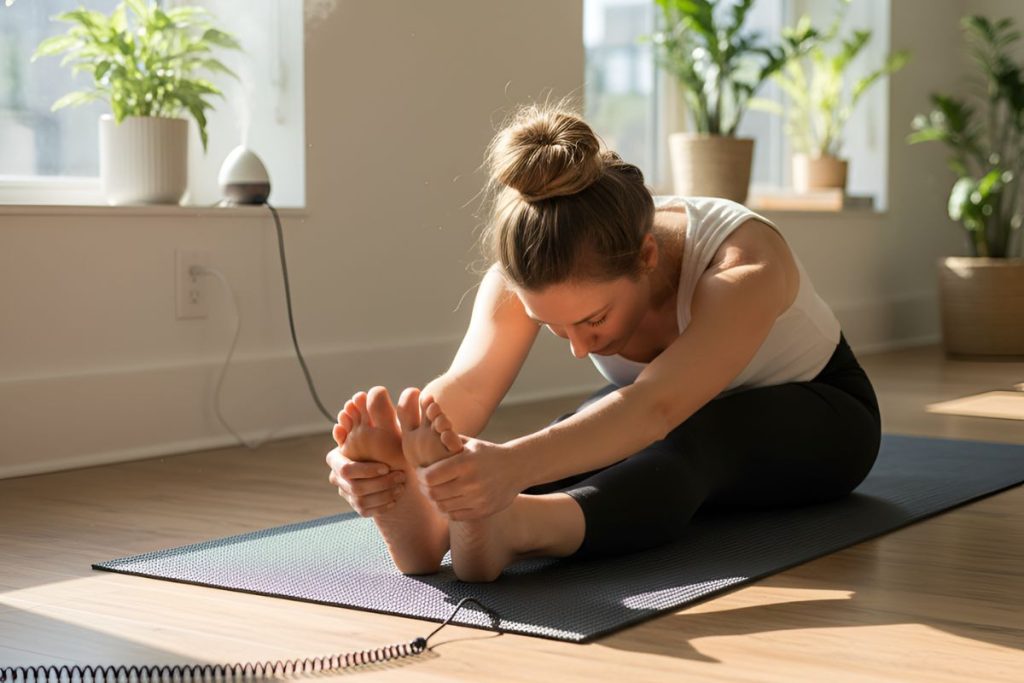
Grounded yoga mats, also known as grounding or earthing mats, are specialty yoga mats designed to keep you electrically connected to the Earth during practice. As you perform yoga on a grounded yoga mat, a conductive layer in the mat and a wire linking to a grounded outlet simulate the natural electrical energy of the Earth. In this article, we’ll explore what is grounding, how grounded yoga mats work, the science behind them, and the potential benefits they offer for yoga practitioners. Whether you’re a seasoned yogi or new to the practice, understanding grounding can help you make an informed choice about using a grounded mat in your routine.
What is Grounding (Earthing)?
Grounding, also called earthing, is the practice of making direct skin contact with the Earth’s surface for example, by walking barefoot on grass, sand, or soil. The idea is that the Earth carries a natural negative electrical charge, and connecting to it can help neutralize positive charge in the body. In modern life, most of us wear insulating shoes and spend time in rubber-tired vehicles or indoors, effectively disconnecting us from this natural energy circuit. Grounding seeks to restore that connection. As one health expert explains, the Earth “absorbs your body’s positive charge,” and in turn we “receive its energy in the form of electrons”.
- Global Electrical Circuit: The Earth and all life are part of a continuous electrical system. Every cell in our bodies is conductive, so when we touch the ground, we become part of the planet’s electric circuit. Historically, humans had constant contact (through barefoot living), but modern insulation (rubber shoes, buildings) broke that link. Grounding aims to re-establish it.
- Cultural Roots: Many cultures recognized grounding long ago. For instance, traditional Chinese medicine and Ayurvedic practices encourage barefoot contact to stimulate the body’s energy flow (qi or prana).
- Outdoor vs. Indoor: Ideally, grounding means being outside. But since weather and urban life often make that difficult, people use conductive mats, sheets, and shoes indoors to simulate the Earth’s energy.
By reconnecting with the Earth’s electrical field, grounding is believed to help stabilize the body’s electrical rhythm. For example, studies note that being conductively connected to the Earth can deepen restorative sleep, normalize cortisol (the stress hormone), relax muscles, and boost mood. While research is still emerging, many people who practice grounding report these kinds of physical and emotional improvements during activities like yoga or meditation, whether on the beach or on a mat.
What is a Grounded Yoga Mat?
A grounded yoga mat (also called an earthing yoga mat) is simply a yoga mat built with a conductive layer or coating that can be plugged into the ground port of a standard electrical outlet. In practical terms, the mat contains a thin conductive strip (often carbon or silver-lined) and a connector that links to your outlet. When you practice yoga barefoot on such a mat, it serves as a bridge between your body and the Earth’s electrical energy. It essentially mimics the effect of standing or sitting on a naturally grounded surface, while you remain indoors.
Electrical Connection
Unlike a regular mat, a grounded yoga mat is electrically conductive. It allows electrons to flow from the Earth into your body, counteracting the positive electrical charge we accumulate from our environment.
Construction
Grounding mats are usually made of non-toxic materials (PVC-free, latex-free) with a conductive thread or coating on top. They often include a grounding cord and a tester plug. Many kits provide a plug-in tester so you can verify the outlet is properly grounded.
How to Use Grounded Yoga Mat
To use the mat, you simply plug the cord into a grounded outlet (one where the third prong is connected to Earth). Once plugged in, you place your bare feet, hands, or body on the mat. As long as the connection is solid, you are “grounded” throughout your practice.
Tip: Always use the tester that comes with the mat to ensure your outlet has a proper ground. A miswired outlet can prevent grounding and may even be dangerous. In general, grounding mats should not be used during electrical storms or in wet conditions to avoid any risk of electric shock.
How Does a Grounding Mat Work: The Science
Grounding mats work by creating an electrical circuit between the Earth and your body. The Earth has a subtle, natural electric field (a DC potential and a low-frequency “heartbeat” known as the Schumann resonance). When your skin touches a grounded mat, electrons flow from the Earth to neutralize any excess positive charge in your body. Dr. Debra Wilson (Healthline) explains, “A grounding mat mimics the electric current of the Earth and allows a person to bring the [earthing] experience indoors”.
Here’s what happens when you use a grounded mat:
- Electron Transfer: Your body can accumulate positive electrical charges from things like electronics and synthetic materials. When you touch a grounded surface, those charges can dissipate, and the Earth’s electrons flow into your body. It’s like getting a natural antioxidant boost.
- Neutralizing Free Radicals: Electrons from the Earth act similarly to antioxidants. Grounding has been shown to neutralize unstable free radicals (which drive inflammation) by providing the body with electrons. In other words, being grounded helps balance your body’s electrical environment.
- Physiological Effects: Small studies on grounding have observed changes in body metrics. For example, grounding has been associated with improved blood flow (by reducing blood viscosity), better immune markers, and enhanced brain-wave patterns. In practical terms, this can mean better circulation and a calmer nervous system during and after your yoga practice.
- Sleep and Stress: Researchers have reported that grounding during sleep can improve cortisol rhythms and sleep depth. This suggests grounding might not only affect you during yoga, but continue to provide benefits throughout your rest after exercise. A more balanced cortisol level (stress hormone) is especially important for recovery and well-being.
Bottom line: The physics is simple the mat is connected to Earth, your body is conductive, so they equalize their charge. This direct connection is believed to help “reset” the body’s electrical state, potentially leading to measurable health shifts. It’s akin to sitting on the ground, but using a yoga mat indoors.
Health Benefits of a Grounded Yoga Mat
Many yoga practitioners are intrigued by the potential wellness benefits of grounding, and for good reason. Although more research is needed, existing studies and user reports suggest several advantages:
- Reduced Inflammation & Pain: Grounding is often claimed to have anti-inflammatory effects. By neutralizing free radicals and balancing the body’s charge, grounding may help decrease chronic inflammation. For example, Healthline notes improvements in muscle recovery and reductions in inflammation from grounding techniques. A study on grounded exercise even showed less muscle soreness afterward compared to no grounding. If you experience chronic pain (like back pain or joint aches), users report that grounding during yoga sometimes helps alleviate discomfort over time.
- Improved Circulation: Research indicates that grounding can make blood flow more easily by reducing blood viscosity (thicker blood means sluggish flow). In fact, one study specifically found that people doing yoga on a grounded mat had significantly lower blood viscosity than those on an ungrounded mat. Thinner blood flows more freely, meaning better delivery of oxygen and nutrients to muscles. This can contribute to better overall cardiovascular health.
- Better Sleep and Hormone Balance: Grounding has been linked to deeper, more restorative sleep. Studies have shown that individuals who slept while grounded saw improvements in sleep quality and normalized cortisol patterns. This may translate to feeling more refreshed and less stressed. If yoga is already helping you relax, adding a grounding mat could enhance those calming effects overnight.
- Stress Relief and Mood: One of grounding’s most commonly claimed benefits is reduced stress and improved mood. The Cleveland Clinic notes that proponents say grounding can “improve mood and reduce stress”. The practice appears to influence the nervous system, promoting a sense of calm. Many people report feeling more centered and focused after grounding a valuable state to carry into or out of a yoga session.
- Pain Management: Anecdotal evidence and some small studies suggest grounding can reduce chronic pain. For instance, grounding has been explored for conditions like arthritis and migraines. Practitioners believe that by reducing inflammation and improving blood flow, grounding helps tissues heal. In a yoga context, this means stiff or aching joints may feel better after several sessions on a grounded mat.
- Enhanced Recovery: If you do intensive yoga (like power yoga or long holds), recovery time matters. A pilot study found that people using grounding techniques after exercise had faster recovery and less DOMS (delayed-onset muscle soreness). Applied to yoga, this means you might feel less sore the next day when using a grounded mat regularly.
Scientific Caveat: It’s important to be realistic. Medical experts (including Cleveland Clinic) caution that the research on grounding is limited and preliminary. In simple terms, some small studies show interesting changes (better sleep, less pain, etc.), but large clinical trials are lacking. Grounding shouldn’t be seen as a cure for medical conditions. Instead, consider it a low-risk wellness tool that many find helpful for improving well-being when used alongside other healthy practices.
Integrating a Grounded Yoga Mat into Your Practice
Adding a grounded mat to your yoga routine is easy and can be done with any style of yoga. Here are some practical tips:
- Setup: Lay the grounded yoga mat on the floor and plug its cord into a grounded outlet. (Use the included tester if you have one to confirm it’s properly grounded.)
- Bare Contact: Yoga works best with skin contact. During your practice, make sure your bare feet, hands, or any body part touch the mat. You can still wear comfortable clothes; just ensure the soles and palms are on the conductive surface.
- Poses: Do your usual yoga sequence whether it’s Sun Salutations, Warrior poses, or Shavasana on the grounded mat. Because your whole body is on the mat, every pose theoretically maintains grounding. No special poses are required.
- Consistency: Try to use the mat regularly. Even a 30-60 minute session can start to make an effect; some studies noticed changes after about an hour of grounding. Over time (weeks to months) many practitioners report stronger benefits like deeper relaxation and less day-to-day discomfort.
- Indoor vs. Outdoor: You can use the mat indoors or outdoors. If you do yoga on a balcony, porch, or deck, you’ll combine the grounding mat’s effect with fresh air. The mat is designed for indoor use, but light outdoor use is okay so long as it stays dry.
- Other Uses: Grounding mats can double as a grounding pad for your feet under your desk, or as a head pad on the bed. In fact, the same grounding technology is also used in mattress pads, pillow covers, and even grounding socks and wristbands.
A quick checklist for use:
- Unplug shoes/socks so skin is bare.
- Plug the mat into the wall outlet’s grounding hole (and test the outlet if possible).
- Place mat on the floor in your yoga space.
- Begin practice, keeping contact with the mat throughout.
- Stay mindful: Notice any sensations of calm or warmth; these can be signs you are “tapping in.”
Choosing the Best Grounding Yoga Mat
With the popularity of earthing, many brands now offer grounded yoga mats. To find the best one for you, consider:
- Conductive Surface: Look for mats with a proven conductive top layer. Most use carbon or silver threads woven into the material. Some are double-sided conductive for full-body grounding. Reviews often note how “conductive” a mat feels.
- Material & Comfort: The mat should be comfortable for yoga. Common bases are natural rubber, PVC, or TPE. Check if it’s non-toxic and free of heavy metals (important if you’ll have bare skin on it). Thickness (usually 3 to 4 mm) should give you enough cushion without feeling ungrounded.
- Connectivity Kit: Good grounding mats include a cord, a grounding plug, and an outlet tester. For example, the original Earthing Yoga Mat comes with a 15-foot cord and an outlet checker to ensure you’re truly grounded. A quality kit prevents faulty grounding (and potential shocks).
- Size: Standard yoga mats are 68 to 72 inches long by ~24 inches wide. If you’re taller or move around a lot, look for “extra long/wide” sizes.
- Durability: Because you’ll sweat and move on it, the mat should be easy to wipe clean. Read reviews about wear and tear, especially of the conductive layer. A mat that loses conductivity over time is a waste.
- Price: Grounding mats range widely in price (roughly $50 to $250 USD). Higher cost often means better build or more material. Decide if you want a basic grounding pad or a top-end yoga-specific mat with all features.
- Warranty & Support: Reliable brands often back their products with a warranty or customer service support. This is useful if the cord or connector fails, or if you have questions.
While we won’t list a single “best brand,” some well-known grounding mat makers are Earthing®, Terra Well, and Grounded Kiwi. They often publish user reviews and clinical citations. When shopping, read product descriptions carefully: they should explicitly mention conductivity, grounding cord, and testing accessories.
Safety Precautions and Considerations
Grounding mats are generally safe, but take these precautions:
- Proper Outlet Use: Only plug the mat into a properly grounded outlet. Do not use a two-prong adapter (unless it’s a certified grounding adapter). A faulty outlet can negate grounding and even risk shock.
- Avoid Water: Keep the mat and cord dry. Do not use grounding mats in bathrooms or near pools. Never step on the mat with wet feet.
- Thundershowers: Never use any grounding product during an electrical storm. The cord acts like a lightning rod if struck.
- Medical Devices: If you have implanted medical devices (pacemaker, ICD) or take life-supporting electrical therapy, consult your doctor. The current from a grounding mat is extremely small, but caution is advised for those with sensitive equipment.
- Health Conditions: People with circulatory disorders or those on blood-thinners should start slowly. For instance, grounding can affect blood pressure; some small studies show it lowering blood pressure in hypertensive subjects. If you’re on blood pressure meds, check with your physician.
- Allergic Reactions: Rarely, people report skin sensitivity or detox reactions. If you feel ill (dizzy, nauseous) when first using grounding, stop and consult a doctor. Most recommendations advise giving your body a couple of weeks to adapt.
- Feet and Wounds: If you have open foot sores or severe dermatitis, treat those first. Grounding involves barefoot contact; be mindful of hygiene and any foot conditions.
- Holistic Caveat: Remember, grounding is an adjunct, not a medical treatment. The Cleveland Clinic emphasizes that while earthing may have benefits, it should never replace conventional medical advice. Always discuss major health decisions with your healthcare provider.
In short, grounding mats are very low-risk for healthy individuals. The main hazards come from misuse (electric issues or stepping hazards, which shoes normally prevent). Follow the manufacturer’s instructions and common sense, and grounding can be a safe addition to your yoga practice.
FAQs About Grounded Yoga Mat
Q: What is a grounded (earthing) yoga mat?
A: It’s a yoga mat with a conductive surface and a plug that connects to a grounded outlet. When you practice on it barefoot, it allows your body to be electrically connected to the Earth, similar to walking on grass.
Q: How does it differ from a regular yoga mat?
A: A regular mat is an insulator it cushions you but doesn’t conduct electricity. A grounded mat includes a metalized or carbon layer and must be plugged in. This lets a small amount of electrical current flow between you and Earth. In use, it feels like any yoga mat, but it carries the potential grounding effects.
Q: What benefits can I expect?
A: Many users report better sleep, reduced inflammation and pain, improved mood, and faster recovery. Some small studies back these claims (e.g. reduced blood viscosity, better sleep markers). Grounding isn’t a cure-all, but it may enhance relaxation and recovery when combined with yoga.
Q: Is grounding safe?
A: Generally, yes, for most people. The main safety point is to use it correctly: plug into a proper outlet and keep it dry. Do not use during storms. If you have medical implants or a serious health condition, consult a doctor first. Grounding products should complement, not replace, medical care.
Q: Do I need to see a doctor about grounding?
A: It’s always wise to discuss new health practices with your doctor. While grounding is low-risk, you shouldn’t stop any treatments on your own. Think of a grounding mat as a wellness tool, and keep your healthcare team in the loop, especially if you have chronic health issues.
Q: Are grounding yoga mats eco-friendly?
A: Many are marketed as eco-friendly. Often they use natural rubber bases and non-toxic materials. The focus is on wellness benefits, but you can find mats labeled “sustainably made” or “PVC-free.” Check product specs if environmental impact matters to you.
Q: Grounding vs. Earthing is there a difference?
A: In practice, these terms are often used interchangeably for connecting to Earth’s energy. Some say earthing refers specifically to being outdoors, while grounding includes indoor methods. For our purposes, they mean the same grounding concept.
Q: Can children or pregnant women use grounding mats?
A: While no large studies say otherwise, it’s best for these groups to be cautious. If you’re pregnant or have underlying conditions, discuss with your doctor. Young healthy children enjoying outdoor barefoot time are naturally grounded indoor grounding mats aren’t usually tested for kids or pregnancy.
Conclusion
A grounded yoga mat adds a unique dimension to your practice by combining ancient wellness ideas with modern science. Yoga already promotes balance and mindfulness, and grounding mats aim to amplify those benefits by tapping into the Earth’s natural energy. Although research is still in early stages, many practitioners report positive changes: deeper sleep, reduced aches, enhanced calm, and greater focus.
Grounding, in essence, is about reconnecting with the Earth a simple act that feels instinctively good. As our bodies and Earth share one global electrical circuit, using a grounded mat can help restore that connection indoors. It’s a gentle, natural practice: thousands of years ago, humans simply walked barefoot in nature; today, we can do it with a modern mat.
If you’re intrigued, trying a grounding mat is easy and usually safe. It could be a meaningful way to support your well-being alongside yoga. And if nothing else, practicing barefoot on a mat keeps you connected (literally!) to the present moment which is, after all, what yoga is about.
💬 Have you tried earthing or a grounded yoga mat? Did you notice any changes in your practice or well-being? Let us know in the comments below! If you found this guide helpful, share it on your favorite social channel to spread the grounding awareness among fellow yogis.
Sources: Reputable health organizations and scientific studies on grounding and earthing have been referenced throughout this article. For more detailed science, see the linked research and expert reviews.