
Creatine is one of the most popular supplements for building muscle and boosting recovery. But when choosing creatine pills vs powder, what really matters? Both contain creatine (usually monohydrate), but they differ in form factor, cost, dosing, and user experience. This comprehensive guide breaks down their differences to help you pick the best option for your fitness needs.
What Is Creatine and How Does It Work?
Creatine is a naturally occurring compound made from the amino acids arginine, glycine, and methionine. Your body stores most of its creatine in skeletal muscle, where it helps regenerate ATP the energy currency used during short bursts of intense exercise. In practical terms, supplementing with creatine increases muscle creatine stores, allowing you to produce more energy in high intensity workouts (like weightlifting or sprinting).
This can lead to greater strength, power, and lean mass gains over time. Creatine is also studied for cognitive benefits and improved recovery. The most researched and effective form is creatine monohydrate, which is found in both powders and pills.
Creatine Powder: Pros and Cons
Creatine powder typically comes in tubs or packets and is mixed with water, juice, or a shake. It’s the classic form of creatine supplement and offers maximum flexibility in dosing. Key advantages of creatine powder include:
- Mixes Easily: You can stir powder into any beverage (water, sports drink, smoothie, etc.). This allows for creative “cocktails” (e.g. with juice to spike insulin) and habit stacking (mixing into morning coffee or protein shakes).
- Fast Absorption: In liquid form, powder begins dissolving immediately, so your body can absorb it slightly faster than a tablet. This means quicker uptake into muscles after ingestion.
- Custom Dosing: Powder is easily measured with scoops or spoonfuls, so you can fine tune your intake. It’s ideal if you want to do a loading phase or adjust down to 1-2 g for maintenance.
- Cost-Effective: Buying creatine in powder form is usually cheaper per gram. Bulk tubs provide more servings for less money.
- No Fillers: Pure creatine powder contains just creatine (and maybe a tiny anti caking agent), so you avoid extra additives. Many brands highlight “Creapure” monohydrate from Germany as a pure option.
However, creatine powder also has some downsides:
- Digestive Discomfort: If not fully dissolved, powder can cause GI issues. Users sometimes experience bloating, stomach cramps, diarrhea or nausea, especially at high doses. Slow consumption and mixing help reduce this.
- Unpleasant Taste/Texture: Unflavored creatine monohydrate is fairly bland, but may feel chalky or grainy. Some people dislike the mouthfeel or the slight aftertaste.
- Preparation Needed: You must mix powder with liquid each time, which can be inconvenient. It’s messy if you’re on the go or don’t have shaker bottles, and you might forget to mix it one morning.
- Portability: Large tubs are not travel friendly (though single serve packets exist). If you frequently travel or need something pocket sized, powder is bulkier.
Creatine Pills: Pros and Cons
Creatine pills or capsules contain the same creatine monohydrate (or another form) pressed into tablet form. They offer ultimate convenience, especially for busy lifestyles. Advantages include:
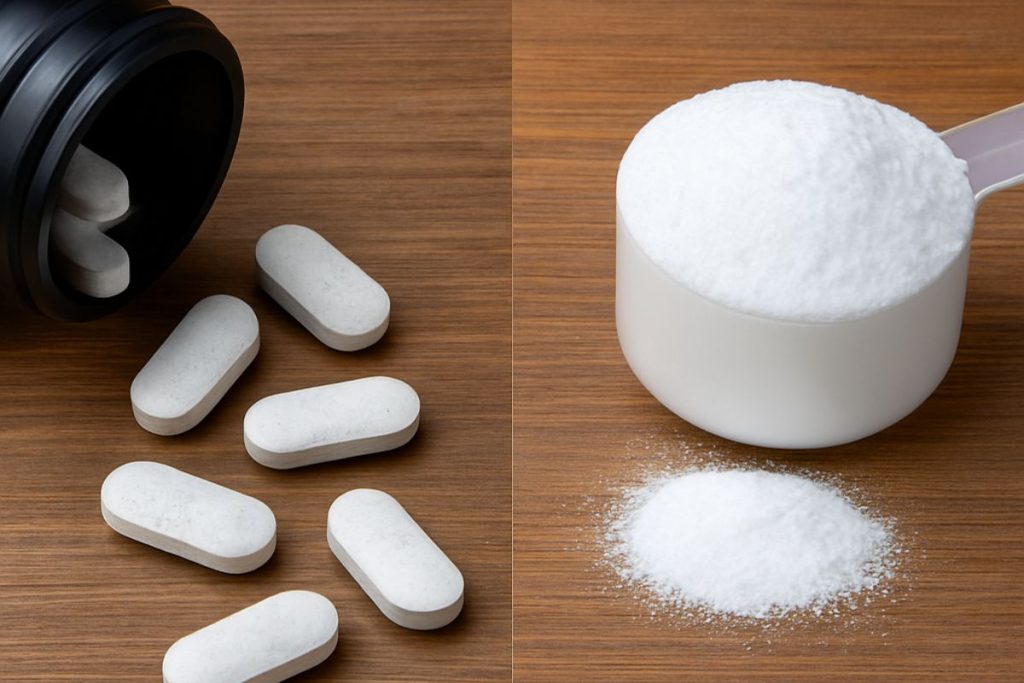
Figure: White creatine supplement pills on a dark background. Capsules deliver a fixed dose of creatine without mixing.
- Convenience: Pills are grab and go. You don’t need to mix anything, so they’re easy to take at work, the gym, or while traveling. No measuring or shaking is required just swallow with water.
- Consistency of Dose: Each capsule contains a precise amount of creatine (e.g. 500 mg or 1,000 mg). This means every dose is the same. There’s no variation if you always take the same number of pills.
- Reduced GI Upset: Because pills dissolve more slowly in the stomach, many people report fewer digestive issues and less bloating.
- No Taste or Texture: Capsules have no flavor or graininess. If you’re sensitive to the gritty feel of powder, pills bypass that problem.
- Easy on the Go: Without powder mess, pills are discreet and easy to carry in a small container or pill box. You can supplement anytime without needing a blender or shaker.
But creatine pills also have drawbacks:
- Multiple Capsules Needed: The standard creatine dose is 3-5 g. If each pill is 1 g, you’ll need 3-5 pills daily. For a 20 g loading phase, that could mean taking 20 pills a day! One comparison noted that achieving 20 g with capsules might require eight 2.5 g capsules per day.
- Less Dosing Flexibility: You’re limited to the pill sizes. It’s harder to take a half dose or 3.7 g exactly you usually have to take whole capsules (e.g., 4 pills = 4 g). This can make custom dosing (like doing exactly 5 g) more cumbersome.
- Slower Absorption: Pills need to dissolve first, so the creatine enters your system slightly later than powder. In practice, the difference is minor, but the effect may be felt a few minutes slower.
- Higher Cost: Tablets cost more per gram of creatine. The extra manufacturing, packaging, and smaller quantity mean a higher price tag.
- Fillers/Additives: Many capsules contain gelatin, magnesium stearate, or other excipients to form the pill. If you have dietary restrictions (vegan, allergies) or just prefer minimal ingredients, powders are often “cleaner”.
- Swallowing Difficulty: If you’re not a fan of pills or have trouble swallowing tablets, taking the higher count needed for a dose can be challenging.
Creatine Pills vs Powder : Key Differences
Both creatine powders and pills ultimately deliver similar performance benefits. Major points of comparison include:
- Effectiveness: Both forms contain the same creatine monohydrate and build muscle equally well. Neither is inherently more powerful.
- Absorption: Powder dissolves immediately for slightly faster uptake, while pills must break down first. In reality, experts note the difference is minor, so choose the form you’ll take consistently.
- Cost: Powder is typically much cheaper per serving. If budget is a concern, the tub of powder often lasts far longer than the same money spent on capsules.
- Convenience: Pills win on portability and ease no mixing or measuring. Powder requires planning (you need water and a shaker) and can’t be as spontaneous unless you carry packets.
- Dosing Flexibility: Powder allows partial scoops or gradual adjustments; pills come in fixed increments. If precise dosing (like a non round gram) is important to you, powder is better.
- Taste & Texture: Pills have no taste or grit; powder sometimes has a chalky flavor or texture if not well mixed.
- Stability: Powder is often more stable long term. An unopened tub can last years without degradation, whereas pills may have slightly shorter shelf life (though both are generally shelf stable).
- Preference & Lifestyle: Some people simply prefer one form. An easy approach is using both: mix powder at home and keep pills in your gym bag. For example, LifeExtension suggests using powder with your morning shake and reserving capsules for when you’re out.
How to Choose the Right Form
Choosing between creatine powder or pills depends on your personal needs:
- Budget & Dosing: If you want the best value and the ability to tweak your dose, powder is usually ideal. You can easily do loading phases (20 g/day) with powder, and you’ll pay less per gram.
- Convenience & Compliance: If you travel a lot or just hate mixing drinks, pills may be right for you. Taking capsules with water is quick and mess free, which can help ensure you take creatine consistently.
- Digestive Sensitivity: Some find pills gentler on the stomach since creatine is released more slowly. If you had bloating with powder, pills might alleviate that.
- Lifestyle Fit: Consider when and how you’ll take it. LifeExtension advises pairing creatine with a daily habit (like morning coffee or pre workout) to make it automatic. Pick the form that fits that routine.
- Quality: Regardless of form, choose a reputable brand. Look for third party tested products (NSF, USP, Informed Sport) to ensure purity. Both powders and pills benefit from certification.
- Form Type: If you’re comparing monohydrate vs HCl, know that monohydrate is the gold standard for performance. Creatine HCl (sold in powder or capsule) dissolves more easily and may reduce bloating, but at matched creatine doses it has shown no extra muscle building effect.
In practice, many people use a mix: they keep a tub of powder at home for mixing into drinks, and carry capsules to take on the go. Whichever you pick, the most important factor is simply to take creatine consistently every day. Aim for about 3-5 g daily. (Studies suggest no formal “loading” is needed muscles fully saturate in ~28 days on a steady dose.) Stay well hydrated when supplementing.
By weighing convenience, cost, and your own habits, you can decide which form creatine powder vs pills is right for you. Remember, both forms are effective; the choice comes down to your lifestyle and preference.
FAQ : Creatine Pills vs Powder
Q: Are creatine pills as effective as powder?
A: Yes. Creatine’s effect comes from the creatine molecule itself (almost always monohydrate), so both pills and powder are equally capable of improving strength and muscle mass. The key is taking the same total dose. Experts agree absorption and results are essentially the same if you take equal amounts of creatine.
Q: Which absorbs faster: powder or pills?
A: Creatine powder dissolves in liquid and begins absorbing right away, so it’s a bit faster. Pills must break down first. However, research shows this speed difference is very small and doesn’t affect overall gains. So don’t worry about timing take whichever form you’ll stick with daily.
Q: Do creatine pills cause fewer side effects?
A: Because creatine pills dissolve more slowly, they may cause slightly less stomach upset or bloating. However, both powder and pills can cause similar creatine related side effects (water retention, weight gain, mild GI discomfort) if doses are high. To minimize issues, spread your dose (take with meals or after workouts) and drink plenty of water.
Q: How many creatine capsules equal a teaspoon of powder?
A: Check the label, but a common creatine scoop is about 5 g. If one capsule contains 500 mg (0.5 g), you’d need ~10 capsules to get 5 g. Many capsules are 1 g, so then 5 capsules. For a 20 g “loading” dose, that might mean 20 of 1g pills, or about eight 2.5g capsules. Manufacturers usually list the creatine per capsule so you can do the math. It adds up quickly, which is why pills become impractical for large doses.
Q: Do I need to do a loading phase with pills or powder?
A: Loading (e.g. 20 g/day for a week) was popular in the past, but it’s not required. Studies show simply taking 3-5 g daily will saturate your muscles in a few weeks. Whether pill or powder, focus on consistency. LifeExtension notes that skipping loading is fine for most people just take the standard 3-5g each day, and your muscles will eventually reach creatine saturation.
Q: Is creatine monohydrate better than creatine HCl (in powder or pill form)?
A: Creatine monohydrate is the most extensively studied form. Creatine HCl (a salt) dissolves in water much more easily and may cause less bloating. However, when you match the amount of actual creatine taken, studies show no significant difference in performance outcomes. In fact, experts still recommend monohydrate as the “gold standard” for muscle and strength gains. If you try HCl (pills or powder), it won’t hurt, but it’s not proven to give extra benefits over plain monohydrate.
Q: Can both men and women use creatine safely?
A: Yes. Creatine is effective for both men and women. Most research is on men (more men tend to use supplements), but women also see strength and muscle benefits from creatine. The dosing is the same (3-5 g daily). No major safety concerns are known for healthy adults taking recommended doses. Always consult a healthcare provider if you have medical conditions, but for most people creatine is well tolerated.
Q: How should I take creatine for best results?
A: Take your dose daily, any time of day. Some mix powder into post workout shakes or coffee; others just swallow pills with a meal. What matters most is consistency. Drink plenty of water, eat a balanced diet, and keep training hard. Many find pairing creatine with carbohydrates (like juice) slightly enhances uptake, but this is optional. Remember, staying on a regular 3–5 g dose is the real key to seeing gains.
By focusing on these points your schedule, budget, and personal preference you can decide whether creatine powder or creatine pills best fits your routine. Both forms deliver the same core benefits, so pick whichever form ensures you’ll actually take it each day. Good luck on your gains, and feel free to share your creatine experiences or questions in the comments below!
Previous Post: Best shoes for bunions women, Good Shoes for Bunions, Glucosamax, Unsweetened Oat Milk