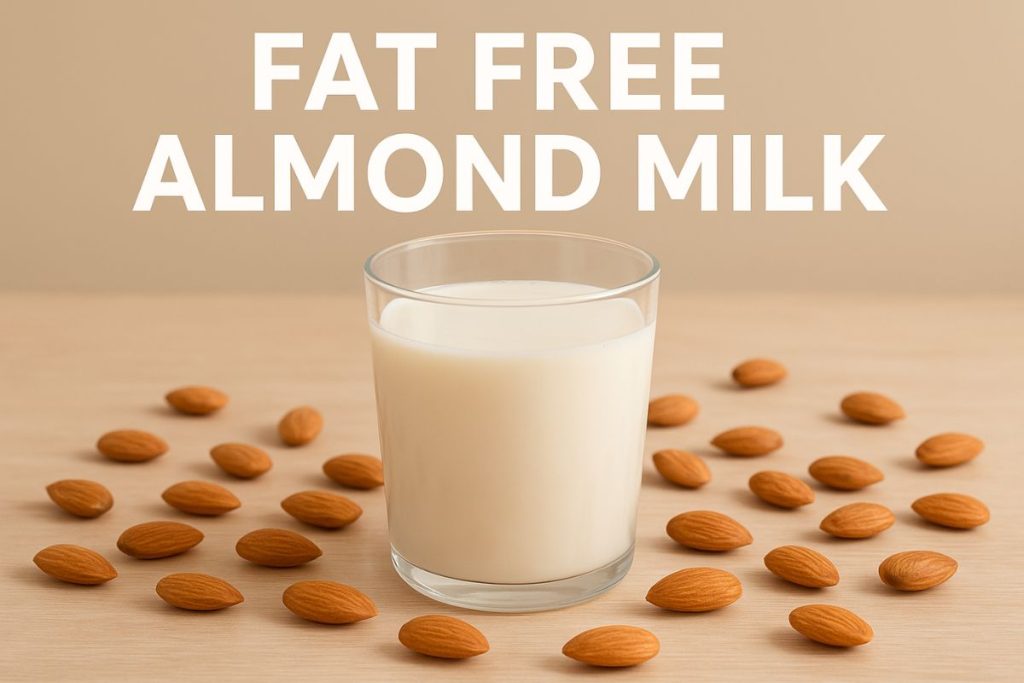
Fat free almond milk is a popular plant-based alternative to dairy. It’s typically made by blending almonds with water and straining out the solids, resulting in a creamy white beverage. Many people choose fat free almond milk as a lactose-free or vegan option. Because almond milk is naturally low in fat and cholesterol, it’s often included in health and weight-loss diets.
Fat free almond milk can be used like regular milk in cereal, coffee, smoothies, and recipes. It has a light nutty flavor and is naturally cholesterol-free. Unlike whole dairy milk, it contains very little saturated fat. In this article, we explore the nutrition, health benefits, and differences of fat free almond milk versus traditional skim (fat-free) dairy milk. We will also answer common questions like “Is almond milk fat free?” and “Almond milk vs fat free milk: which is healthier?”.
What Is Fat Free Almond Milk?
Almond milk is a plant-based milk made from soaked almonds and water. The almonds are ground and strained, leaving a smooth liquid. Most commercial almond milks are unsweetened (no added sugar) and are often fortified with vitamins (A, D) and minerals (calcium) to boost nutrition. When labeled “fat free almond milk,” this usually refers to the unsweetened variety. Even so, unsweetened almond milk still contains a tiny amount of natural almond fat. For example, 100 grams of plain almond milk has about 1.2 grams of total fat.
Almond milk is much lower in calories than cow’s milk. A 100g serving of unsweetened almond milk contains only about 15 calories. In practical terms, an 8-ounce cup (240mL) of almond milk has roughly 40 calories, compared to about 80 calories in a cup of skim milk. Most almond milks on store shelves are fortified with calcium and vitamins D and A to make them nutritionally similar to dairy milk.
Is Almond Milk Fat Free?
“Is almond milk fat free?” The answer is not completely. Unsweetened almond milk still has some fat from the almonds. Recall that a 100g serving had 1.2g fat, so a whole cup contains about 2–3 grams of fat. By comparison, fat-free (skim) cow’s milk has 0 grams of fat.
However, almond milk’s fat is mostly healthy unsaturated fat. It has essentially no saturated fat or cholesterol, making it a heart-friendly choice. Nutrition experts note that unsweetened almond milk is “one of the lowest calorie milk alternatives” and is “naturally low in saturated fat”. In summary, almond milk is low in fat but not strictly “fat-free” by definition it simply has very little fat.
Nutrition: Almond Milk vs Fat-Free Skim Milk
To compare almond milk and fat-free cow’s milk, consider an 8-ounce (240mL) serving of each:
- Calories: Unsweetened almond milk has about 40–50 calories per cup. Skim milk has around 80 calories per cup.
- Protein: Almond milk provides only about 1 gram of protein per cup, whereas skim milk has 8 grams.
- Fat: Almond milk has about 2–3g of fat per cup (all unsaturated, no cholesterol); skim milk has 0g fat.
- Carbohydrates: Almond milk has roughly 2g of carbs per cup; skim milk has about 12g (all from natural milk sugar).
- Sugar: Unsweetened almond milk contains almost no sugar, while skim milk has 12g of natural sugar (lactose). (Flavored almond milks can have added sugars.)
- Calcium & Vitamins: Fortified almond milk often has calcium and vitamins D/A. For example, one brand’s almond milk provides 45% of the Daily Value (DV) for calcium per cup, whereas skim milk provides 25%. Both are usually fortified to similar levels of vitamin D and A. Almond milk naturally contains vitamin E (which dairy milk does not).
Unsweetened almond milk is clearly lower in calories and carbohydrates than skim milk, but also much lower in protein. Skim milk delivers more protein and naturally occurring vitamins. The table below summarizes key differences:
| Nutrient | Skim Milk (8oz) | Unsweetened Almond Milk (8oz) |
| Calories | 80 | 41 |
| Protein | 8g | 1g |
| Fat | 0g | 2.5g (unsaturated) |
| Carbs (sugar) | 12g (12g lactose) | 2g |
| Calcium (DV) | 25% | 45% (fortified) |
| Vitamin D, A | 15% each (fortified) | 25–50% each (fortified) |
(Sources: USDA and nutrition labels.)
Benefits of Fat Free (Unsweetened) Almond Milk
- Low Calorie & Weight Management: Because it has so few calories, almond milk is popular for weight loss or calorie control. Unsweetened almond milk is “one of the lowest calorie milk alternatives available”, making it excellent for those trying to lose weight.
- Heart-Healthy Fats: The small amount of fat in almond milk is mostly monounsaturated, which is better for your heart. It contains no cholesterol. Diets low in saturated fat (like almond milk) can help reduce heart disease risk.
- Lactose-Free and Vegan: It’s naturally free of lactose and dairy proteins, so it’s safe for those with lactose intolerance or milk allergies. It’s also suitable for vegans or anyone avoiding animal products.
- Vitamin E: Almonds are high in vitamin E, and almond milk reflects that. A cup of almond milk can provide over 20% of the daily vitamin E requirement, acting as a potent antioxidant. Vitamin E may reduce inflammation and protect cells from damage.
- Fortified Nutrients: As mentioned, most almond milks are fortified. Fortified almond milk can be an excellent source of calcium, vitamin D, and vitamin A. Some brands even exceed the calcium content of dairy milk. This makes it easier to meet nutrient needs on a dairy-free diet.
- Low Carbs: Unsweetened almond milk has about 2g of carbohydrates per cup, which is much lower than dairy milk. This makes almond milk suitable for low-carb or diabetic-friendly diets.
- Versatility: Almond milk can replace milk in nearly any recipe. It blends well into smoothies, coffee, cereal, soups, and baked goods. Its mild nutty flavor is well-liked. Many people enjoy almond milk in coffee or tea without noticing much difference.
Nutritionists often highlight unsweetened almond milk as a top choice for reducing calories. One guide advises that “if your primary goal is to keep calories as low as possible, unsweetened almond milk is often the winner”. It’s “incredibly versatile” and works well in smoothies, coffee or cereal. It’s also “naturally low in saturated fat”【42†L300-302】, aligning with heart-healthy dietary advice.
Drawbacks of Almond Milk
- Low Protein Content: The biggest drawback is its low protein. With only about 1g per cup, almond milk does not keep you as full as higher-protein alternatives. It’s much lower in protein than dairy or soy milk. If protein is important in your diet, you may need to combine almond milk with other protein sources (e.g. adding protein powder to a smoothie).
- Added Ingredients: Some store-bought almond milks contain thickeners and emulsifiers (such as carrageenan or gums). While generally recognized as safe, some research suggests carrageenan could irritate the gut lining in sensitive people. If you have digestive issues, look for brands without unnecessary additives.
- Potential Sugar: Flavored or sweetened almond milks can contain significant added sugar, which adds calories. Always choose “unsweetened” to avoid hidden sugars.
- Allergen: Almond milk is made from tree nuts, so it is not suitable for those with nut allergies.
- Nutrient Gaps: Naturally, almond milk has much less calcium, vitamin B12, and certain other nutrients than cow’s milk. This is why fortification is key. If you rely on almond milk, choose fortified versions to meet nutrient needs.
- Not for Infants: Unsweetened almond milk should not replace breast milk or formula for infants; it lacks essential fat, protein, and other nutrients needed for growth. Similarly, toddlers need full-fat milk or specialized formulas.
- Cost & Environment: Almond milk can be more expensive than dairy milk. Also, almond farming uses considerable water (though it generally has a lower carbon footprint than dairy production).
Many of these drawbacks can be managed (e.g. choosing fortified, unsweetened varieties, and eating a balanced diet), but they are worth keeping in mind.
Almond Milk vs Fat Free Milk: Which is Better?
Choosing almond milk or fat-free (skim) milk depends on your goals:
- For Weight Loss/Low Calories: Almond milk wins. It has about half the calories of skim milk, helping create a calorie deficit. Nutritionists often list unsweetened almond milk as a top pick for weight management.
- For Protein Needs: Skim milk wins. With 8g of protein per cup, it supports muscle maintenance and fullness far better than almond milk’s 1g.
- For Heart Health: Both can be heart-healthy. Almond milk’s fat is unsaturated and it has no cholesterol; skim milk has no fat or cholesterol at all (since it’s fat-free). If saturated fat is a concern, both unsweetened almond and skim milk are low in that regard.
- For Allergies/Dietary Restrictions: Almond milk is ideal for lactose intolerance, dairy allergy, or vegan diets. If you cannot or do not want to consume dairy, almond milk is the alternative.
- For Nutrients: Skim milk naturally provides vitamins B12, riboflavin, etc. Almond milk needs to be fortified to provide similar levels of these nutrients. If you rely on milk to get calcium and vitamin D, ensure your almond milk is fortified.
- Taste and Use: Some people simply prefer the taste or texture of one over the other. You can use both in different contexts for example, almond milk in a smoothie, and skim milk in a protein-rich breakfast.
In practice, many people enjoy both. A helpful tip from dietitians: prioritize unsweetened versions. Whether almond or dairy, choosing unsweetened cuts out unnecessary sugars. You might even mix them: almond milk in the morning coffee or cereal, and skim milk with an afternoon snack for protein.
How to Use Fat Free Almond Milk
- Coffee and Tea: Almond milk can be frothed or simply poured into hot beverages. Many coffee shops offer almond milk lattes or cappuccinos.
- Smoothies: Blend almond milk with fruits, vegetables, and protein powder for a nutritious smoothie. Its mild flavor won’t overpower other ingredients.
- Cereal & Oatmeal: Use it as you would cow’s milk on cereal or oatmeal. It adds moisture and a subtle nutty taste.
- Cooking and Baking: Substitute almond milk for milk or water in recipes (soups, sauces, pancakes, baked goods). Note: because it’s thinner than whole milk, you may need to adjust thickening agents in some recipes.
- Drinking: Enjoy it chilled as a refreshing beverage. It can be flavored (vanilla, cinnamon) or consumed plain.
- Desserts: Use almond milk in dairy-free desserts like puddings, chia seed pudding, homemade ice cream, or milkshakes.
Tip: Almond milk can separate when heated or with acidic ingredients. Always shake the container before pouring and stir it into recipes. Gradually mixing it in can help prevent curdling.
FAQs About Fat Free Almond Milk
Q: Is almond milk really fat free?
A: No, pure almond milk contains a small amount of fat (about 2–3g per cup) from almonds. Fat-free skim milk has 0g fat. Almond milk is low-fat but not 100% fat-free.
Q: Which has fewer calories almond milk or skim milk?
A: Almond milk (unsweetened) has fewer calories. An 8oz cup of unsweetened almond milk has 40 calories, while an 8oz cup of skim milk has 80 calorie.
Q: Which has more protein almond milk or skim milk?
A: Skim milk has much more protein (8g vs 1g per cup). If protein intake is a concern, skim milk is the better choice.
Q: Can diabetics drink almond milk?
A: Yes, especially unsweetened almond milk. It’s low in carbs (about 2g per cup) and won’t spike blood sugar. In contrast, skim milk has 12g of carbs (lactose). Diabetics should choose unsweetened, fortified almond milk and be mindful of total carbohydrates in their diet.
Q: Which is better for weight loss almond milk or fat-free milk?
A: For weight loss, unsweetened almond milk is often recommended. It has about half the calories of skim milk. Dietitians commonly list almond milk as a top low-calorie choice.
Q: How many almonds are in a glass of almond milk?
A: Surprisingly few. Commercial almond milk is mostly water. USDA data suggests roughly 3–4 almonds in an 8oz serving, which is about 2% almonds by weight.
Q: Is fat free almond milk safe for babies and toddlers?
A: Plain unsweetened almond milk is not recommended for infants or very young toddlers. It lacks enough calories, fat, and protein for healthy growth. Infants should have breast milk or formula. Toddlers should drink whole cow’s milk or a pediatrician-recommended formula, unless dairy must be avoided for medical reasons.
Q: Is almond milk environmentally better than dairy?
A: Almond milk generally has a smaller carbon footprint than dairy, but almond trees require a lot of water. It’s still often considered more sustainable than cow’s milk in terms of emissions. (If water usage is a concern, oat milk or other plant milks may use less water.)
Conclusion
Fat free almond milk (unsweetened almond milk) is a low-fat, low-calorie dairy alternative made from almonds and water. It’s naturally lactose-free and has a light, nutty taste. We saw that unsweetened almond milk has roughly half the calories of fat-free cow’s milk, but only a tiny fraction of the protein. It’s an excellent choice for vegans, those with lactose intolerance, or anyone looking to cut calories. It also provides antioxidant vitamin E and, when fortified, calcium and vitamins D/A.
Skim milk, on the other hand, offers more protein and naturally occurring dairy nutrients, but at higher calories. The best choice depends on your nutritional goals. For maximum calorie reduction and a dairy-free diet, fat free almond milk is often ideal. For higher protein and naturally rich nutrients, fat-free dairy milk may be preferable.
In any case, opt for unsweetened, fortified versions of almond milk to get the most benefit. Always check the nutrition label, compare calories and protein, and choose the milk that best fits your health needs and taste preferences.
Sources: Authoritative nutrition guides and USDA data were referenced for this article.
Previous Post: Sticky Purple Salvia, Medvice Hot Cold Pack, Lower Denture Implants